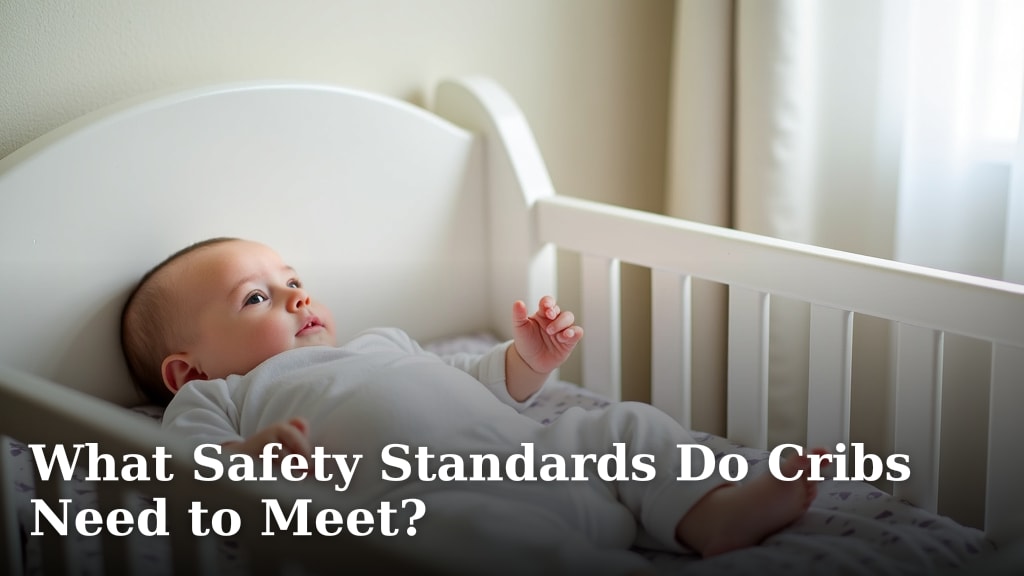
What Safety Standards Do Cribs Need to Meet?
Cribs need to meet strict federal safety standards to be sold legally in the United States. The Consumer Product Safety Commission (CPSC) sets these rules to prevent injuries and deaths. Your baby’s crib must have no drop sides, sturdy slats, and proper mattress support.
We found that these rules cover everything from materials used to construction methods. The goal is to create a safe sleep space. Many experts say looking for a CPSC label is the first step.
- All cribs must pass federal safety standards.
- Look for the CPSC certification label.
- Drop-side cribs are banned in the U.S.
- Slats must be no more than 2 3/8 inches apart.
- Check for recalls before you buy any crib.
Below, we break down exactly what to look for when shopping for a safe crib. Let’s walk through the key rules to keep your little one safe and sound.
Key Federal Crib Safety Standards in the United States
The U.S. government has clear rules for crib safety. These standards are not suggestions; they are laws. The Consumer Product Safety Commission (CPSC) enforces them. If a crib is sold in the U.S., it must meet these requirements. Your job is to check for the label proving it does. This isn’t about being picky; it’s about following science and data to prevent tragedies.
Understanding Slats and Slat Spacing
Crib slats are the bars on the sides. They are a primary defense. The space between them must be safe. A baby’s head can get trapped in a gap that is too wide. The rule is clear: slats must be no more than 2 3/8 inches apart. You can test this with a standard soda can. If it fits through the gap, the crib is not safe. The slats themselves must also be strong. They cannot crack or break easily.
- Gap must be less than 2 3/8 inches.
- Test with a soda can as a guide.
- Slats must be securely attached to the frame.
Why Slat Strength Matters
Weak slats can break under pressure. A toddler might lean or push against them. The wood or metal must be durable. The CPSC tests for this. They apply force to see if slats crack or detach. When you look at a crib, give the slats a gentle push. They should feel very solid. No wobbling is allowed.
Mattress Support and Height Settings
The platform that holds the mattress is critical. It must be firm and stay in place. A sagging mattress support is a major hazard. It can create gaps where a baby can become trapped. Most cribs have adjustable heights. This is for your convenience as your baby grows. The highest setting is for a newborn. The lowest setting is for a baby who can sit up. You should move the mattress down when your baby can pull to a stand.
| Mattress Height Setting | When to Use It | Safety Reason |
|---|---|---|
| Highest | Newborn stage | Easier on your back for lifting. |
| Middle | When baby can push up | Lower to prevent climbing. |
| Lowest | When baby can sit/stand | Prevents falling or climbing out. |
Hardware, Finishes, and Construction
Safety isn’t just about design. It’s also about how the crib is built. Screws, bolts, and connectors must be strong. They must not work themselves loose over time. The finish on the wood or metal is also regulated. It must be non-toxic. Babies chew on everything. The paint or coating cannot contain harmful lead. You can look for a sticker stating it meets the ASTM International standard. This is another layer of protection.
Inspecting for Sturdy Construction
Before buying, examine the crib. Look for any sharp edges or protruding bolts. Shake it gently. A well-made crib should feel like a single, solid unit. It should not rock or creak. Check where the corners are joined. These joints must be reinforced. We found that cribs with a simple, solid frame are often the most reliable.
The Danger of Old or Used Cribs
Used cribs can be very risky. They might not meet current standards. Parts can be missing. Hardware can be worn. The finish may be chipped and unsafe. The CPSC strongly advises against using a secondhand crib. There is no way to be certain it is safe. If you must use one, check its model number against the CPSC recall list.
The Complete Ban on Drop-Side Cribs
You might see an old crib with one side that moves up and down. This is a drop-side crib. They are illegal to sell in the United States. This ban started in 2011. The mechanism was a leading cause of infant deaths. The hardware could break, creating a deadly gap. Never use a drop-side crib. Not even if it looks fine. The risk is simply too high.
How did this happen? The moving parts wore out. Gaps formed between the mattress and the side. Babies could roll into this space and suffocate. The ban was a direct result of data showing these specific dangers (CPSC).
Safe Sleep Environment Beyond the Crib
A safe crib is the foundation. But the entire sleep space matters. The mattress should fit snugly. No more than two fingers should fit between the mattress and the crib side. Use only the mattress that came with the crib. Do not add pads or pillows. The AAP recommends a bare mattress only. This reduces the risk of suffocation.
- Firm, flat mattress that fits tightly.
- Use only a fitted sheet.
- No blankets, pillows, bumpers, or toys.
Choosing the Right Mattress
The mattress must be the right size for the crib. It must be firm. Press on the center and edges. It should snap back immediately. A soft mattress is a suffocation risk. Look for a GREENGUARD Gold certification. This indicates low chemical emissions. It’s about both physical safety and air quality.
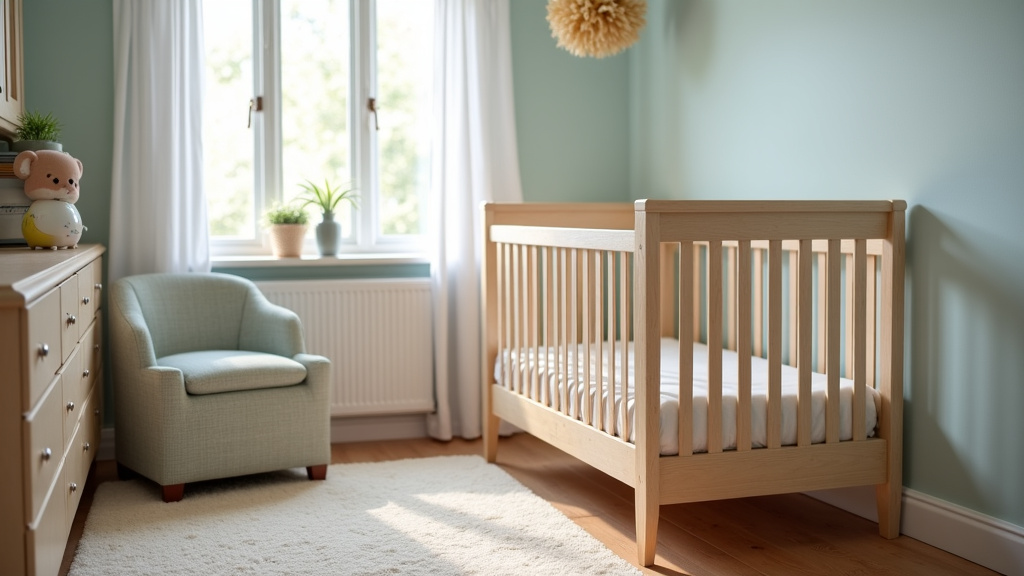
Your Pre-Purchase Checklist for a Safe Crib
Shopping can be overwhelming. Use this simple list when you’re at the store or online. It focuses on the key safety points.
- CPSC Label: Find the manufacturer’s label with the model name and number.
- No Drop Sides: Visually confirm all four sides are fixed in place.
- Slat Spacing: Use a soda can to test the gaps.
- Recall Check: Before you buy, check the model number on the CPSC website.
- Sturdy Frame: Give it a gentle shake. Listen for noises. Look for solid joints.
- Snug Mattress: Ensure a tight fit with no large gaps.
Where to Find Verified Information
When in doubt, go to the source. The CPSC website has all the federal standards. They also maintain a complete list of recalled products. Many experts say this is your most reliable tool. The American Academy of Pediatrics (AAP) also provides safe sleep guidelines. These are based on extensive research into infant sleep-related deaths. Trust these authoritative sources over marketing claims.
You are your baby’s best advocate. Taking a few minutes to understand these standards can give you peace of mind. A safe crib isn’t a luxury. It’s a requirement. And now, you know exactly what to look for.
Conclusion
A safe crib is your baby’s most important piece of furniture. Federal standards set by the CPSC are there to prevent tragedies, not just as guidelines. Remember the key rules: no drop sides, slats spaced less than 2 3/8 inches apart, and a sturdy, non-toxic finish. Always check for the manufacturer’s label and verify the model isn’t recalled. Your job is to be the final check before bringing the crib home. Use our pre-purchase checklist as your guide and visit the CPSC website to confirm any crib you’re considering.
Frequently Asked Questions
What should I do if I have a drop-side crib that I inherited?
You should stop using it immediately. Drop-side cribs are banned in the U.S. due to serious safety risks like gaps that can trap a baby. It’s best to dispose of it or contact the manufacturer for safe disposal options.
Can I use a crib that doesn’t have a CPSC label but looks sturdy?
No, you should not use a crib without a CPSC label. The label proves it meets current federal safety standards. Without it, you have no guarantee it’s safe, so it’s best to choose a certified model.
How often should I inspect my crib for loose hardware or damage?
You should inspect your crib regularly, at least once a month. Check for loose screws, cracks, or any signs of wear. Always inspect it again after moving the crib or adjusting the mattress height.
What are the risks of using a crib manufactured before 2011?
Cribs made before 2011 may not meet current safety standards, especially regarding drop-sides and slat spacing. They could have outdated designs that are now known to be dangerous. Always check the model number against the CPSC recall list.
How do I ensure the mattress fits snugly if I buy it separately?
Measure your crib’s interior dimensions and buy a mattress that matches exactly. When placed in the crib, press on the mattress to test its firmness. There should be no more than a two-finger gap between the mattress and the crib sides.