What Is the Safety Rating of a Crib? The Key Facts
When it comes to keeping your baby safe, a crib’s safety rating is a key factor. Cribs themselves don’t get an official “rating” like a car. Instead, safety is determined by whether they meet strict government standards and pass independent testing. You can trust that cribs sold in the U.S. must meet the Consumer Product Safety Commission (CPSC) standards.
Understanding these standards is important for your peace of mind. It ensures the crib has no dangerous gaps and is built with sturdy materials. We’ve looked into what makes a crib safe. You want to be sure your little one has a secure place to sleep, and knowing the key facts about crib safety helps you make that choice.
- Cribs don’t have a single “rating.”
- Safety relies on meeting CPSC standards.
- Look for sturdy construction and safe design.
- Independent testing confirms safety.
- Your baby deserves a secure sleeping space.
Below, we break down exactly what those safety standards involve and how you can check if a crib is safe for your baby.
What Makes a Crib Safe: Understanding Safety Standards
You’re probably wondering if a crib has a “safety rating” like a toy might. The truth is, cribs don’t get a single, easy-to-understand rating. Instead, their safety is measured by how well they meet strict government standards. In the United States, these standards are set by the Consumer Product Safety Commission (CPSC).
These rules exist to protect your baby from common dangers. Think of them as the blueprints for a secure sleep space. We’ve looked into what these standards actually mean for crib design and manufacturing. It’s all about ensuring your little one has a safe place to dream. The article explains what a crib bumper is and why it is not recommended for safety reasons.
The Key Crib Safety Standards You Need to Know
The CPSC sets a number of requirements for cribs. These rules cover everything from the size of the slats to the sturdiness of the hardware. Knowing these can help you spot a safe crib when you’re shopping. Let’s break down the most important ones.
Slats and Spacing: No Room for Trouble
One of the biggest safety concerns is the distance between crib slats. If they are too far apart, a baby’s head could get stuck. If they are too close, it could create a pinching hazard. The CPSC has very specific guidelines here.
- Crib slats must be no more than 2 3/8 inches apart. This is roughly the width of a soda can.
- This spacing prevents a baby’s torso from fitting through while allowing airflow.
You’ll also want to check the slats themselves. They should be smooth and free of splinters or sharp edges. Any damage here could create a safety issue.
Mattress Support: Keeping it Firm and Secure
The mattress support is the base that holds the mattress. It’s a critical part of the crib’s structure. A weak or poorly designed support system can lead to problems.
- The mattress support must be sturdy and well-constructed.
- It should fit snugly within the crib frame, leaving no large gaps.
- This prevents the mattress from shifting or falling, which could trap a baby.
Many cribs offer adjustable mattress heights. Make sure the support at whatever height you choose is firmly secured.
Hardware and Assembly: Tight and Right
The screws, bolts, and other hardware used to assemble a crib are also regulated. Loose hardware can lead to a crib falling apart.
- All hardware must be securely fastened.
- There should be no sharp points or edges sticking out from the hardware.
- When assembling the crib, follow the instructions exactly.
We found that some older crib designs had drop-side rails that could become faulty. Modern cribs are designed to prevent this common hazard.
Corner Posts and Decorative Elements: No Entanglement Risk
Some cribs might have decorative elements, like finials on the corner posts. These need to be safe too.
- Corner posts should not extend more than 1/16 of an inch above the end panels.
- This prevents clothing from snagging on them, which could lead to strangulation.
- Decorative cutouts or designs should not pose entrapment risks.
Generally, simpler designs with fewer fancy additions tend to be safer. It’s one less thing to worry about.
Paint and Finishes: Non-Toxic and Durable
Babies explore the world with their mouths. That’s why the finishes on a crib are important.
- All paints and finishes must be lead-free and non-toxic.
- They should be durable enough to withstand chewing without flaking off.
The CPSC has strict limits on lead content in crib finishes. This protects your baby from lead poisoning.
How to Verify a Crib’s Safety: Beyond the Label
So, how do you know if a crib you’re considering meets these standards? It’s more than just reading a label. You need to do a little detective work.
Look for Safety Certifications
While there isn’t a single “rating,” many manufacturers will voluntarily have their cribs tested by independent organizations. These organizations ensure the crib meets CPSC standards and often go beyond them.
- Look for labels or statements indicating that the crib meets ASTM International standards.
- ASTM International develops and publishes voluntary consensus technical standards for a wide range of products, including cribs.
If you see a mention of meeting these standards, it’s a good sign. It means the manufacturer has invested in third-party verification.
Check for Recalls
Even the safest cribs can sometimes have issues. It’s wise to check for any past or current recalls before you buy.
- Visit the CPSC website for recall information.
- You can also check the Juvenile Products Manufacturers Association (JPMA) website for certified products and recall alerts.
This quick check can save you from purchasing a crib that has been identified as a safety risk.
Inspect the Crib Carefully
When you’re in the store, or when your crib arrives, give it a thorough inspection. Think of yourself as a safety inspector for your baby’s first bed.
Checklist for a Safe Crib Inspection:
- Are the slats spaced correctly (no more than 2 3/8 inches apart)?
- Is the mattress support firm and securely attached?
- Are there any loose parts, screws, or sharp edges?
- Does the crib seem sturdy and well-built overall?
- Are the paint and finishes smooth and intact?
- Does it have any small holes or openings where a baby could get trapped?
Trust your instincts. If something looks or feels off, it might be worth looking at another option.
What About Used Cribs?
Buying a used crib can seem like a good way to save money. However, it comes with significant risks. Older cribs may not meet current safety standards.
In 2011, new CPSC crib standards were put into effect that banned the sale of drop-side cribs. These were a major safety hazard. If a used crib has drop-side rails, it is illegal to sell and unsafe to use.
- It’s best to buy a new crib that meets current safety standards.
- If you do accept a used crib, verify it was manufactured after June 28, 2011.
- Check the CPSC website for recalls on that specific model.
Your baby’s safety is worth the investment in a new crib that you know is up to snuff.
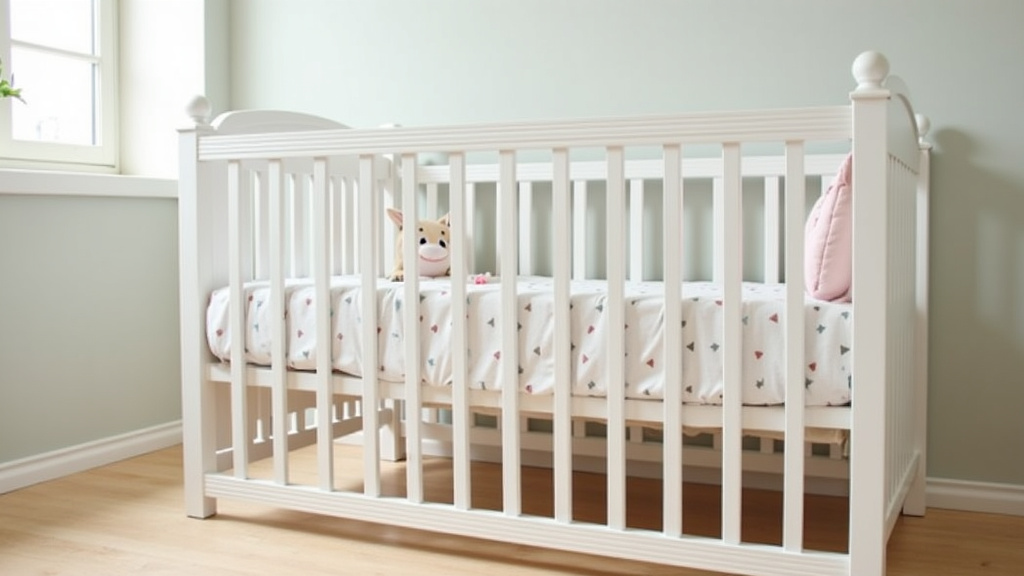
The Importance of a Safe Crib for Your Baby’s Well-being
We understand that choosing baby items can feel overwhelming. There are so many options, and the safety information can seem complex. But when it comes to a crib, safety isn’t just a feature; it’s the foundation of your baby’s sleep.
A crib that meets CPSC standards provides a secure environment. This means fewer worries for you and a safer space for your little one to rest and grow. Always prioritize cribs that are built with safety in mind and have undergone rigorous testing.
Conclusion
When choosing a crib, remember there isn’t one single “safety rating.” Instead, you should focus on whether a crib meets the strict government standards set by the CPSC. We’ve looked into the key requirements, from slat spacing to sturdy hardware. A crib that passes these checks provides a secure foundation for your baby’s rest. Your next step is to look for certifications like ASTM standards and always check for recalls. Trust your eyes and hands during inspection. Choosing a safe crib is one of the most important decisions you’ll make for your baby’s well-being.
Frequently Asked Questions
Where can I find official crib safety standards?
The official crib safety standards in the U.S. are set by the Consumer Product Safety Commission (CPSC). You can find detailed information about these regulations on the CPSC website. They outline all the requirements for safe crib design and manufacturing.
What does it mean if a crib meets ASTM standards?
When a crib meets ASTM standards, it means the manufacturer has had it independently tested by an organization that follows ASTM’s voluntary safety guidelines. This shows an extra commitment to safety beyond basic CPSC requirements.
Are cribs with adjustable mattress heights safe?
Yes, cribs with adjustable mattress heights can be safe when they meet all CPSC standards. Ensure the mattress support is firmly attached and secure at whichever height you choose. Always follow the manufacturer’s assembly instructions carefully.
Is it safe to buy a crib manufactured before 2011?
It is generally not recommended to buy a crib manufactured before June 28, 2011. This is when updated CPSC standards banned dangerous drop-side cribs. Older cribs may not meet current safety guidelines and could pose risks.
How can I tell if a crib’s paint is safe for my baby?
All cribs sold in the U.S. must use lead-free and non-toxic paints and finishes. You can ensure this by buying from reputable brands and checking for certifications. The paint should also be durable and not easily chipped or flaked off.