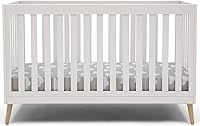
Are Mini Crib Liners Safe?
A mini crib mesh liner is usually unnecessary, and adding one can create a hazard. Keep the crib bare, follow its manual, and ask your pediatrician or local safety authority about any specific concern.
On this page (7 sections)
- Are mini crib mesh liners safe?
- What can a mini crib liner do, and what can't it do?
- How should you handle a baby's arms or legs near the slats?
- What should go in a mini crib instead?
- How can you choose a mini crib without relying on a liner?
- What if you already bought a mini crib liner?
- How do you decide whether to use a mini crib mesh liner?
A mini crib mesh liner is usually unnecessary, and adding one can create a hazard. Keep the sleep space bare, use the mattress and fitted sheet made for the crib, and follow the crib manual.
Mini cribs save room, but the smaller interior doesn't make extra padding a safer choice. Before adding any accessory, check whether the crib maker allows it and whether it changes the fit of the mattress or blocks a feature.
Are mini crib mesh liners safe?
A mesh mini crib liner is not a default safe sleep accessory. Mesh does not remove the risks that come with extra fabric, ties, or other attachments inside a crib.
A liner may be marketed to keep arms and legs inside the slats or soften contact with the rails. That purpose doesn't mean it's needed or that it prevents injury.
Use a crib as designed, with a firm, flat mattress that fits snugly and a fitted sheet. Keep bumpers, liners, pillows, loose blankets, toys, and positioners out of the sleep space.
For the wider safety checklist, read What Safety Features Should a Crib Have?. If you're comparing materials and finishes, our guide to best non toxic baby cribs explains what to consider.
What can a mini crib liner do, and what can't it do?
A liner can cover part of the crib's slatted sides, but it can't correct an unsafe crib or mattress fit. It also doesn't make a mini crib more suitable for sleep by itself.
A liner may reduce the chance that a small limb passes through a gap, depending on its design and how it is attached. But if the crib has a broken slat, loose fastener, damaged rail, or mattress that doesn't fit, stop using it and follow the manufacturer's repair or replacement guidance.
Don't use a liner to cover a gap between the mattress and crib wall. A mattress that shifts or leaves a gap may be the wrong size or may not be set up correctly.
A mini crib's compact dimensions also don't make accessories interchangeable. Check the crib manual and mattress label for the right mattress size and setup.
Can a breathable liner prevent suffocation?
A “breathable” description is not a reason to add a liner to an infant's crib. Keep the sleep surface clear and use only the items specified for the crib.
Material that allows some airflow still adds an object to the sleep space. It may loosen, sag, or change position, especially if the ties or fasteners are not secure.
If you have a question about a particular accessory, contact the crib maker and your pediatrician before using it. A product label cannot replace instructions for your exact crib.
How should you handle a baby's arms or legs near the slats?
Leave the liner out and check the crib for damage, missing parts, or setup problems. If you find any, stop using the crib until you can follow the maker's repair instructions.
Babies may move their arms and legs through crib slats as they learn to roll and change position. That can worry parents, but a liner is not the only response and may add its own hazards.
Check that the mattress is set at the correct height for your baby's stage. Lower it when the manual says to do so as your baby grows and begins sitting, pulling up, or standing.
If your baby is repeatedly getting stuck or appears injured, contact the crib maker and your pediatrician. Don't cut, bend, or remove crib parts to make a gap wider.
What should go in a mini crib instead?
Use only a correctly fitting mattress and a fitted sheet made for that mattress. Keep the rest of the sleep space empty unless the crib's instructions call for a specific part.
The Dream On Me 4-in-1 Mini Baby Crib is described as fitting small rooms and using a standard mini crib mattress sold separately. Its mattress support has 3 positions, so follow the manual as you adjust the setup.
Before using any mini crib, confirm the exact mattress dimensions and fit against the crib manual. Learn more about the size and tradeoffs in [What Is a Mini Crib?
Everything You Need to Know](/what-is-a-mini-crib/).
A regular crib may suit your room and plans better if you want a longer-use sleep space. The Dream On Me Synergy 5-in-1 Baby Crib converts to a toddler bed, daybed, and full-size bed with separately sold conversion parts.
For parents who need a bedside sleep space for a newborn, the BabyBond Bassinet Bedside Crib has full mesh sides and a drop-down side. It is a bassinet option, so use it according to its own instructions rather than treating it as a mini crib.
How can you choose a mini crib without relying on a liner?
Choose a mini crib with clear instructions, compatible parts, and a mattress that fits the frame. The right setup should not depend on an added liner to cover gaps or cushion the sides.
Before buying, measure the available floor space and check the crib's outside dimensions. Then confirm what mattress size it uses, which parts come with it, and which conversion pieces are sold separately.
The Dream On Me Aden mini crib measures 39 in long by 28 in wide by 37 in high, and its mattress is sold separately. Its maker describes it as GREENGUARD Gold certified and BSA Verified, and says it is tested to meet applicable ASTM and CPSC safety standards.
For more on choosing a crib, see How to Pick a Safe Crib: Key Features to Know. If a compact sleep setup is part of a small nursery plan, compare options in best cribs for small spaces.
What if you already bought a mini crib liner?
Don't install it until you've checked the crib manual and asked the manufacturer about that exact accessory. If the instructions don't allow liners or don't address them, leave the liner out and contact the maker for guidance.
Keep the packaging and product details while you ask. A seller's general fit claim may not address the crib's slat spacing, attachment points, mattress fit, or instructions.
If you already attached the liner, remove it before your baby's next sleep and check that no ties, fasteners, or loose fabric remain in the crib. Then review the manual to confirm that the crib is assembled correctly.
For a broader discussion of crib bumpers and liner limits, read Are Baby Crib Liners Safe?. A liner doesn't replace a safe crib, a correctly fitted mattress, or the manufacturer's setup instructions.
How do you decide whether to use a mini crib mesh liner?
Leave the liner out unless the crib manufacturer explicitly approves that specific accessory for your model. Keep the mattress fit correct, the crib in good repair, and the sleep space clear.
If a limb slips through the slats, check the crib and mattress setup, then contact the manufacturer if you still have concerns. If the crib is damaged or a part is missing, stop using it until you can follow the maker's repair guidance.
Choose a mini crib for its smaller footprint, not because it needs a liner. For conversion plans, see mini crib to toddler bed, and keep any changing-area accessories separate from the crib's sleep space, including a keekaroo changing pad cover.
Frequently asked questions
Are mesh liners safe for mini cribs?
A mesh label alone doesn't make a crib liner safe. Liners add material and attachment points inside the sleep space, so the safer default is to leave them out and follow the crib and mattress instructions.
Ask the manufacturer or a safety professional about a model-specific concern.
Can a mini crib liner prevent a baby's arms or legs from getting stuck?
A liner may cover gaps, but that doesn't make it a safe fix for a crib with damaged parts, loose rails, or an incorrect mattress fit. Check the manual and stop using a crib with a broken or missing component until it is repaired or replaced as directed.
What should I put in a mini crib for sleep?
Use the correctly fitting mattress and a fitted sheet designed for it, with no liner, pillow, blanket, toy, or positioner. Follow the crib and mattress manuals, and place your baby on their back for sleep unless a clinician gives different instructions for your child.
What can I do if my baby bumps the crib sides?
Don't add a liner to cushion bumps. Check that the mattress is at the height required for your baby's development, keep the sleep space clear, and ask your pediatrician if you have concerns about repeated injuries or unusual movement during sleep.