How to Choose an Electric Baby Crib
Choose an electric crib for baby sleep by checking its motion, sleep space and manufacturer use limits first. Then compare monitoring and sound features, setup needs, and what happens if you stop using the powered functions.
On this page (9 sections)
- What does an electric crib for a baby do?
- Should you choose a bassinet, crib or playard?
- Which powered soothing features matter?
- What should you check in a smart crib?
- How do use limits affect your choice?
- What safety checks belong on your shortlist?
- How do the available options compare?
- When does a rocking crib make sense?
- How should you make the final choice?
Choose an electric crib for baby sleep by matching its soothing motion and sleep-space type to your child’s age and the manufacturer’s limits. Check whether it is a bassinet, full-size crib or playard, then compare its powered features, monitoring, sound options and setup needs.
“Electric crib” can describe different products. A high tech baby crib may include a camera and app, while another model may focus on motion or offer no powered soothing at all.
Start with the sleep surface and the rules for using it. Then decide which powered features solve a real need for your family.
What does an electric crib for a baby do?
An electric crib uses power for one or more features, such as soothing motion, sound or connected monitoring. The label alone does not tell you what the sleep space is or how the motion can be used.
A smart crib may use sensors or a camera to respond to movement, while another product may need a parent to switch a feature on. These designs are not interchangeable, so look for clear instructions on operation, sleep use and shutoff.
Separate the core sleep space from the added features:
- Sleep-space type: bassinet, full-size crib or playard.
- Soothing: rocking, bouncing, vibration or sound, if offered.
- Monitoring: camera, motion alerts, sleep tracking or an app, if offered.
- Limits: age, weight, developmental stage and any rule for powered motion.
- Ongoing needs: app access, subscriptions, charging or a nearby outlet, when applicable.
A powered feature can help with a particular routine, but it does not make a product suitable for every baby or every stage. Use the manufacturer’s instructions as the deciding source for how and when each feature may be used.
If you’re comparing motion-based sleep spaces, our guide to a baby crib rocker explains what to check about rocking designs.
Should you choose a bassinet, crib or playard?
Choose the sleep-space type by where your baby is in their growth and where you plan to use it. An electric feature does not change the limits of the underlying bassinet, crib or playard.
A bassinet may suit an early stage, but it can have a shorter use window than a crib. A full-size crib may serve longer, while a playard can fold for travel or move between rooms.
Check the exact model’s approved use and its transition rules before treating one type as a substitute for another.
| Sleep-space type | What to compare | A good fit when |
|---|---|---|
| Bassinet | Age, weight and developmental limits | You want a smaller sleep space for an early stage |
| Full-size crib | Mattress fit, support positions and conversion parts | You want a dedicated nursery sleep space |
| Playard | Bassinet and playard limits, fold and setup | You want a portable space for more than one use |
| Convertible smart model | Each configuration’s limits and feature availability | You want powered features plus a stated conversion path |
Some products combine more than one format. Compare crib and bassinet combo options when considering a combined setup.
For example, Cradlewise describes its smart model as converting from bassinet to crib for use from newborn stage through toddlerhood, up to 24 months.
Follow the company’s instructions and limits for each configuration.
The newborn crib checklist can help you compare the basic sleep-space needs alongside powered features.
Which powered soothing features matter?
Pick the motion or sound feature you expect to use, and confirm when the manufacturer allows it. A feature list is less useful than knowing how it starts, stops and fits your baby’s current stage.
Before choosing a powered crib, look for answers to these questions:
- Does motion start automatically, or do you activate it?
- What cues or controls trigger it?
- Does it stop on its own, and can you stop it manually?
- Is the motion intended for soothing, sleep, or both?
- Are there limits tied to age, weight or movement?
- Does the product need a phone, Wi-Fi, an app or a subscription for core functions?
- What happens to the sleep space if the powered features are switched off?
For a model with automatic soothing, read the instructions closely. Confirm the allowed settings and when to discontinue motion, rather than assuming that “auto-soothing” means continuous movement is appropriate.
Sound features also vary. If the crib includes a sound machine, check which sounds it offers, how you control volume and whether it can run without an app.
Keep the sound feature separate from your decision about the quality and safe use of the sleep space.
Motion is an added feature, not a substitute for checking sleep-space fit and use limits. If the product’s instructions don’t clearly answer your questions, ask the manufacturer before using that function.
What should you check in a smart crib?
A smart crib can combine soothing, monitoring and app controls, but the set of features and access terms vary. Check which functions are built in, which require an account and what remains available over time.
Cradlewise’s smart bassinet and crib combines automatic bounce, an AI baby monitor, sound machine, alerts and app controls. The company includes 2 years of Nurture Core access, with an optional upgrade and an option to restart a subscription after that period.
Think through how you’ll use those features during a normal night. Consider whether you want live video, alerts or sleep tracking, and whether phone access is convenient for everyone who cares for the baby.
A camera or movement alert can help you check in, but it doesn’t replace direct supervision. If you’re deciding whether a separate monitor still makes sense, read how to choose a baby monitor.
For a closer look at one connected model’s features and limits, see our Cradlewise smart crib reviews.
How do use limits affect your choice?
Check the manufacturer’s age, weight and developmental limits for every mode and feature. A crib may allow one use for longer than another, and the powered function may have its own restrictions.
Read the manual before assembly, then keep the limits easy to find as your baby grows. Pay attention to instructions about when to stop using the bassinet, when to change configurations and whether motion must stop at a specific stage.
A convertible product can extend the range of configurations, but it does not mean every mode works for every age. Confirm the limits for the bassinet and crib separately, as well as any restriction on automatic soothing.
Avoid relying on a general age range alone. Your baby’s development, the product’s instructions and its specific weight limits all matter.
What safety checks belong on your shortlist?
Start with the sleep space, assembly instructions and current safety information. Powered features are secondary to using the product as designed.
Before you buy or set up an electric crib:
- Confirm the product’s exact type and intended use.
- Read the current manual, including any instructions for motion or app features.
- Check that the mattress and fitted sheet are the correct fit for that sleep space.
- Assemble the frame and any powered parts exactly as directed.
- Check for recalls and review applicable safety standards for the product type.
- Follow the manufacturer’s age, weight and developmental limits.
The U.S. Consumer Product Safety Commission provides crib safety guidance.
Use official guidance alongside the instructions for the exact model you’re considering.
Don’t treat a certification or a smart feature as a replacement for following safe-sleep practices. If you’re comparing crib construction and hardware, our guide to choosing crib hardware covers the parts that hold a crib together.
How do the available options compare?
These three options serve different needs: a powered smart sleep space, a convertible standard crib and a portable playard. Compare the format and stated limits before treating them as alternatives.
Cradlewise All-in-One Convertible Smart Bassinet and Crib
This is the only option here with built-in automatic bounce, a monitor, sound machine and app features. Cradlewise describes it as a bassinet-to-crib conversion for newborns through toddlerhood, up to 24 months.
It includes a VOC and PU foam-free crib mattress, fitted sheet and mattress cover, along with 2 years of Nurture Core access. Cradlewise states that the model is Baby Safety Alliance verified to meet ASTM and CPSC standards for cribs, bassinets, mattresses and monitors, and is GREENGUARD Gold Certified.
Consider it if you want powered soothing and monitoring in one product. Review the subscription terms, setup requirements and instructions for both configurations before deciding whether its connected features suit your household.
Delta Children Essex 4-in-1 Convertible Baby Crib
The Essex is a standard convertible crib, not an electric crib. Its adjustable mattress support has 3 positions, and it converts to a toddler bed, daybed and sofa; the toddler guardrail is sold separately.
It uses a standard-size crib mattress, sold separately. The crib measures 54 x 29.5 x 34 in, and Delta Children says it is JPMA certified to meet or exceed ASTM safety standards.
Consider it if you want a dedicated crib without built-in powered soothing. Check which conversion parts you’ll need for later stages and whether a standard-size crib mattress fits your room and budget plan.
For a traditional spindle style, see our Jenny Lind baby crib guide.
Pamo Babe Pack and Play 4-in-1 Baby
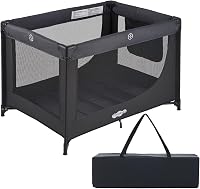
The Pamo Babe is a portable playard with a newborn bassinet, insert bassinet and changing table. It folds for transport and includes a carrying bag, but it does not include powered soothing features.
Its stated playard limit is 33 lb, and the infant bassinet limit is 20 lb for ages 0–6 months. The diaper changer has a 25 lb limit for ages 0–6 months, so follow the separate limits for each function.
Consider it if portability and multiple care functions matter more than automatic motion. Check the setup instructions and confirm which configuration is appropriate for your baby before use.
When does a rocking crib make sense?
A rocking design may suit you if you want motion as part of soothing and the manufacturer clearly explains how to use it. Don’t assume a rocking crib is electric or that every motion setting is intended for sleep.
Compare the movement, controls and shutoff instructions. If the motion requires a parent to rock the crib, consider whether you want to provide that movement yourself or prefer an automatic feature.
Our rocking baby crib guide covers manual rocking designs. For a different nursery look, see how to choose an acrylic baby crib, and compare its construction and intended use with the options above.
How should you make the final choice?
Choose the sleep-space type first, then decide whether powered features are worth the added setup and ongoing needs. Pick a smart convertible model if automatic soothing and built-in monitoring are priorities; choose a standard crib if you want a dedicated sleep space without those functions; choose a playard if portability and multiple uses matter most.
Before you decide, make sure the product fits your room, your routine and your baby’s current stage. Read the manual, confirm the separate limits for each configuration and check how any app or subscription works.
Use the baby crib guide to compare other crib types and features as you plan the nursery.
About this guide
This guide covers electric baby cribs and powered soothing features, including sleep-space type, monitoring and manufacturer use limits.
Frequently asked questions
What is an electric crib for a baby?
An electric crib for a baby is a sleep space with powered features, such as automatic soothing motion, sound or app-based monitoring. The term covers different designs, so check whether the model is a bassinet, full-size crib or playard, and follow its own age, weight and use limits.
Are electric baby cribs safe?
Safety depends on the specific sleep space, how it is assembled and whether you follow the manufacturer’s instructions and limits. Check applicable standards and current recalls, and use the crib only as directed.
Powered soothing does not replace supervision or safe-sleep practices.
Can a baby sleep in a rocking or bouncing crib all night?
Use rocking or bouncing only as the manufacturer permits. Check whether the motion is intended for soothing or for sleep, whether it stops automatically, and what to do when your baby can roll, sit or reach a stated weight limit.
Don’t assume every powered model allows overnight motion.
What should I compare in a smart baby crib?
Compare the sleep-space type, motion settings, monitoring features, sound options, app needs and any subscription terms. Then check the crib’s dimensions, mattress requirements, age and weight limits, and what features remain available if you turn off or stop using the connected functions.
Is a smart crib the same as an electric crib?
A smart crib is one type of electric crib. It may combine powered motion with an app, camera, alerts or sleep tracking, while another electric model may offer only a basic powered feature.
Compare the actual functions and limits instead of relying on the label.