
What Is the Ideal Crib Height for Parents?
The ideal crib height for parents is typically adjustable, allowing you to lower it as your baby grows. Many modern cribs feature a multi-level mattress support system. You should aim for a height that makes it easy to place your baby in and take them out without straining your back. A good rule of thumb is to have the top of the crib rail about 25 inches above the mattress when it’s at its highest setting for newborns.
Finding the right crib height is important for baby safety and your own comfort. As your child becomes more mobile and starts to stand, you’ll need to lower the mattress. This prevents them from climbing out. Research suggests that the highest side rail setting should be at least 9 inches above the mattress. Always ensure the mattress fits snugly inside the crib frame for added safety.
- The best crib height lets you reach your baby easily.
- Lower the mattress as your baby grows and starts to stand.
- Safety standards recommend specific distances between mattress and rail.
- Adjustable cribs are the most practical for long-term use.
We know finding the perfect crib setup can feel like a puzzle. Below, we break down exactly what you need to know about crib heights to keep your little one safe and your back happy.
Setting Your Baby’s Crib to the Right Height
Finding the perfect crib height is all about striking a balance. You need to make sure your baby is safe. You also need to be able to comfortably reach your little one. This isn’t just about convenience; it’s about preventing strain on your body. We’ve researched the guidelines to help you get it right.
The ideal crib height isn’t a single measurement. It changes as your baby grows and develops new skills. What works for a newborn will not work for a mobile infant. That’s why most modern cribs offer adjustable mattress support. This feature is designed with your baby’s safety and your ease of use in mind.
Understanding Crib Mattress Support Levels
Most cribs come with a mattress support frame. This frame usually has several positions. You’ll set it at a higher level when your baby is very young. As they grow, you’ll lower it. This is the primary way you adjust the crib height.
The highest setting is for newborns. This is when your baby can’t yet push up or stand. It allows you to easily place your baby in and take them out of the crib. You won’t have to bend down as much. This is a big relief for your back, especially during those frequent nighttime feedings.
When your baby starts to roll over and push up, it’s time to lower the mattress. This is a critical safety step. The lower position makes it harder for your baby to climb out of the crib. Think of it as adding an extra layer of protection as they become more adventurous.
Safety Standards for Crib Height and Railings
Safety is, of course, the most important factor. Regulatory bodies have established guidelines for crib design to ensure infant safety. These guidelines address the distance between the mattress and the top of the crib railing.
The U.S. Consumer Product Safety Commission (CPSC) provides important safety standards. These standards aim to prevent suffocation and entrapment hazards. They also help prevent babies from falling out of the crib.
Minimum Rail Height Above Mattress
When the mattress is on its lowest setting, the top of the mattress should be at least 26 inches below the top of the crib’s side rails. However, when the mattress is on its highest setting, the top of the mattress should be at least 9 inches below the top of the side rails. This 9-inch gap is a key safety measure (CPSC).
Why is this gap so important? It creates a barrier. This barrier is designed to keep your baby safely inside the crib. It prevents them from easily tumbling over the side. As your baby grows taller, the mattress will be lowered to maintain this safe distance.
Maximum Mattress Thickness
It’s not just about the railing height. The mattress itself plays a role in safety. The mattress must fit snugly within the crib frame. There should be no gaps larger than two fingers wide between the mattress and the crib sides. This prevents a baby from getting their head or limbs trapped (CPSC).
Mattress thickness is also regulated. A mattress that is too thin can create dangerous gaps. Most standard crib mattresses are about 5-6 inches thick. Always check the manufacturer’s recommendations for the correct mattress size and thickness for your specific crib model. A snug fit is non-negotiable for safety.
Adjusting Crib Height for Your Baby’s Development
Your baby’s journey from a tiny, sleepy newborn to a mobile toddler is rapid. You’ll need to adjust the crib height to keep pace with their development.
Newborn Stage: Highest Setting
When your baby is first born, they are largely immobile. They spend most of their time sleeping and being held. During this phase, you’ll use the highest mattress support setting. This position is your best friend for ease of use.
You can easily reach in to pick up or put down your baby. You won’t have to strain your back. This is especially helpful during those early weeks when you’re recovering and likely sleep-deprived. Think of it as a gift to your body from the crib manufacturers.
Baby Starts to Push Up: Lower the Mattress
This is a huge milestone! Your baby is gaining strength and becoming more curious. Once your baby can sit up unassisted, or more importantly, push up on their hands and knees, it’s time to lower the mattress. This usually happens between 4 to 6 months of age, but every baby is different.
Consult your crib’s manual for instructions on how to lower the mattress support. You’ll typically need to unscrew or unhook the frame and move it to a lower set of holes or slots. This transition is crucial for preventing falls. Don’t wait until they are already pulling themselves up; anticipate their growing abilities.
Baby Pulls to Stand: Lowest Setting
The final stage of mattress adjustment is the lowest setting. This is typically reached when your baby can pull themselves up to a standing position. This often occurs around 8 to 10 months of age, though it can vary widely.
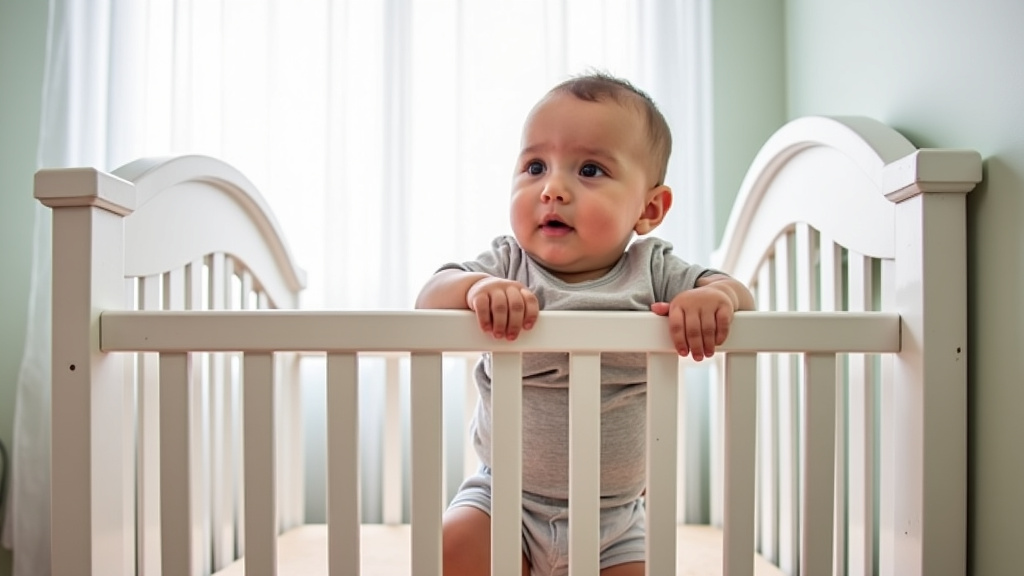
At this point, the crib railing will be at its highest relative to the mattress. This creates the maximum possible barrier. It ensures that even a determined climber cannot get out. This is usually the setting the crib stays in until the child transitions to a toddler bed.
Crib Height Considerations for Different Crib Types
Not all cribs are created equal. While most modern cribs offer adjustability, there are some variations to be aware of.
Standard Convertible Cribs
These are the most common type. They typically have 3-4 mattress support levels. This allows for the gradual lowering as your baby grows. You’ll find these very straightforward to use. Follow the steps outlined above for adjusting the mattress support.
Bassinet-to-Crib Systems
Some systems start as a bassinet and then convert to a crib. The bassinet portion usually has a fixed height. Once you convert it to a crib, the adjustable mattress support feature will become available. Check the specific conversion instructions for your model.
Antique or Hand-Me-Down Cribs
Older cribs may not meet current safety standards. They might have fixed mattress heights or designs that are no longer considered safe. If you’re using an older crib, we strongly recommend checking it thoroughly against current CPSC guidelines. If it doesn’t meet them, it may be time to invest in a new, compliant crib. Safety first is always the best policy.
Measuring Your Crib Height Effectively
How do you know if your crib is at the right height? It’s simple measurement and observation.
First, make sure the mattress is in place. Then, take a measuring tape. Measure from the top of the mattress to the top edge of the crib’s side rail. Do this for the highest and lowest settings of your mattress support.
For the highest setting (newborns), you want that measurement to be at least 9 inches. For the lowest setting (when baby can stand), the distance should be at least 26 inches from the top of the mattress to the top of the side rail. These measurements are key to ensuring compliance with safety standards (CPSC).
Tips for Easy Crib Access and Safety Checks
Beyond just the height, a few other things can make life easier and safer.
- Check the Mattress Fit: Ensure there are no gaps larger than two fingers between the mattress and the crib frame.
- Review the Manual: Always consult your crib’s specific instruction manual for adjustments and safety information.
- Inspect Regularly: Check that all screws and hardware are tight. Look for any loose or damaged parts.
- Bedding Safety: Use only fitted sheets. Avoid bumpers, thick blankets, and stuffed animals in the crib with infants to reduce SIDS risk.
- Positioning: Place the crib away from windows, blinds, cords, and heaters.
Performing these simple checks can give you peace of mind. They also help maintain a safe sleep environment for your baby. Your baby’s safety and your comfort are intertwined.
Troubleshooting Common Crib Height Issues
Sometimes, things don’t go as planned. Here are a few common issues and how to address them.
Difficulty Adjusting Mattress Support
If the mattress support frame seems stuck, double-check that there are no children or items in the crib. Ensure you are following the manual’s instructions precisely. Sometimes, a little wiggling or a second person can help. If parts seem damaged, contact the manufacturer.
Gaps Appearing Around the Mattress
As cribs age or if a non-standard mattress is used, gaps can appear. If the gaps are larger than two fingers, you must address this immediately. Consider a crib wedge designed to fill these gaps safely, or invest in a properly sized crib mattress. Never use a crib with significant gaps.
Straining to Reach Baby
If you find yourself constantly straining, even on the highest setting, consider your own physical needs. Ensure you’re not overbending. Sometimes, a small, sturdy stool can help you reach into the crib more comfortably. Remember, your well-being matters too!
The Bottom Line on Ideal Crib Height
The “ideal” crib height is really a range, dictated by your baby’s developmental stage and safety regulations. It’s a dynamic setup that requires your attention as your baby grows. By understanding the adjustable features of your crib and adhering to safety guidelines, you can create a secure and accessible sleep space.
The goal is to always have the mattress set low enough to prevent falls but high enough for you to easily access your baby. Regular checks and timely adjustments are key. Prioritizing safety, combined with ease of use, will make nighttime routines smoother for everyone.
| Baby’s Stage | Mattress Position | Key Safety Consideration |
|---|---|---|
| Newborn (Cannot Sit Up) | Highest Setting | Easy access for parents, prevents early falls. |
| Sitting/Pushing Up (4-6 Months) | Middle Setting(s) | Prevents climbing out as mobility increases. |
| Pulling to Stand (8-10 Months) | Lowest Setting | Maximum barrier against falls as baby becomes mobile. |
Your Crib Height Checklist
Here’s a quick checklist to ensure your crib setup is safe and appropriate:
- Have you confirmed your crib has an adjustable mattress support system?
- Is the mattress at the highest setting for your newborn?
- Have you lowered the mattress since your baby started sitting or pushing up?
- Are there any gaps larger than two fingers between the mattress and the crib sides?
- Is the top of the side rail at least 9 inches above the mattress on the highest setting?
- Is the top of the side rail at least 26 inches above the mattress on the lowest setting?
Conclusion
Finding the ideal crib height is about more than just convenience; it’s a key part of your baby’s safety. As you’ve learned, the “perfect” height changes as your baby grows. You’ll use the highest setting for newborns to make access easy and then lower it to prevent falls as they gain mobility. Always remember to check your crib’s manual and follow safety guidelines regarding the mattress-to-rail distance. Your attentiveness ensures a safe sleep space for your little one.
Now, take a moment to measure your crib’s current mattress height and compare it to the recommended distances. If an adjustment is needed, don’t delay making those changes for your baby’s security.
Frequently Asked Questions
When should I lower the crib mattress for the first time?
You should lower the crib mattress as soon as your baby begins to sit up independently or pushes up on their hands and knees. This typically happens between 4 to 6 months old, but every baby develops differently. This adjustment is vital to prevent them from climbing out.
Can I use a crib that doesn’t have adjustable mattress heights?
While some older or specialized cribs might have fixed heights, most modern cribs are designed with adjustable mattress support. If your crib has a fixed height, ensure it meets current safety standards for both the highest and lowest potential positions relative to your baby’s development. If it doesn’t meet safety requirements, you may need a new crib.
What if my baby’s mattress seems too small or too big for the crib?
A snug mattress fit is critical for safety. If there are gaps larger than two fingers between the mattress and the crib sides, it’s a hazard. You should either get a properly sized crib mattress or use a safe mattress wedge designed for this purpose. Never use a crib with significant gaps around the mattress.
How often should I check the crib height settings?
You should check and adjust the crib height as needed based on your baby’s developmental milestones. A good rule is to reassess the height every few weeks once your baby starts becoming more mobile. Always consult your crib’s manual for specific instructions on making adjustments.
Are there any specific tools I need to adjust the crib height?
Typically, adjusting the mattress support on most cribs requires basic tools like a screwdriver, as the support frame is often attached with screws. Always refer to your crib’s instruction manual, as it will detail the exact tools needed and the step-by-step process for lowering the mattress base.