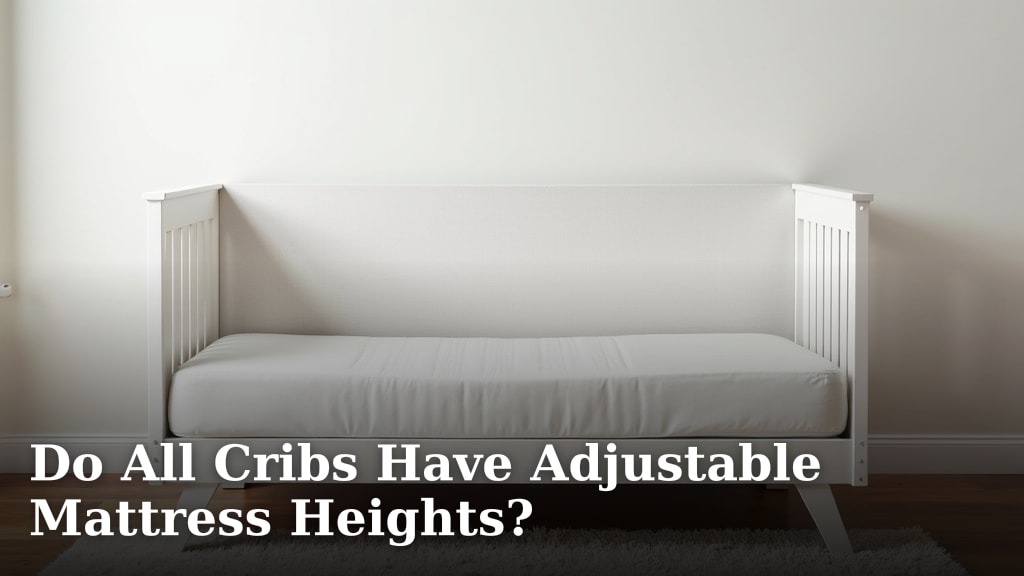
Do All Cribs Have Adjustable Mattress Heights?
Do all cribs have adjustable mattress heights? No, not all cribs come with adjustable mattress heights, though most modern ones do. This feature is designed for safety and convenience. It lets you lower the mattress as your baby grows, making it harder for them to climb out.
When you’re looking for a crib, knowing about the adjustable mattress base can save you trouble. Many cribs offer multiple height settings. This allows you to start with a higher setting for newborns. Then, you can lower it as your baby becomes more mobile and stronger. It’s a key feature for parents seeking long-term value and safety.
- Most, but not all, cribs have adjustable mattress heights.
- This feature allows you to change the mattress level.
- Lowering the mattress keeps older babies safe.
- Check the product details before buying a crib.
Let’s walk through exactly what adjustable mattress heights mean for your crib purchase and how to spot them.
Does Every Crib Offer Adjustable Mattress Heights?
When you’re preparing for your little one’s arrival, choosing a crib is a big decision. You’re likely thinking about safety, style, and how long the crib will last. One feature that plays a big role in both safety and longevity is the adjustable mattress height. But do all cribs actually have this feature? The short answer is: most modern cribs do, but not every single one.
This feature is more than just a convenience. It’s a key safety mechanism. As your baby grows from a tiny newborn to a curious toddler, their mobility changes dramatically. The adjustable mattress base allows you to adapt the crib’s height. This is important for keeping your baby safe in their sleep space. We’ll break down what this means for you and your shopping experience.
Understanding the Adjustable Mattress Base
Think of the adjustable mattress base as the foundation of your baby’s crib. It’s the part where the mattress rests. On cribs with this feature, the base can be moved up or down. This is usually done by repositioning support rods or brackets. The goal is to create a safe sleeping environment at different stages of your baby’s development.
Why the Height Matters for Safety
When your baby is a newborn, they spend most of their time sleeping. You’ll want the mattress set to its highest position. This makes it easy for you to lift your baby in and out of the crib. It also means the sides of the crib are quite high above the mattress. This prevents a very young baby from rolling over the edge.
As your baby starts to grow, they’ll reach new milestones. They’ll begin to push up, sit, and eventually stand. This is where the adjustable mattress base becomes essential. Once your baby can pull themselves up, you need to lower the mattress. The general guideline is to lower it when your baby reaches about half the height of the crib’s side rails when the mattress is in its highest position.
We found that many safety experts recommend this step. Lowering the mattress significantly reduces the risk of a mobile baby climbing out of the crib. It creates a deeper space between the top of the mattress and the top of the railing. This makes it much harder for them to tumble over.
Convenience and Long-Term Use
Beyond safety, adjustable mattress heights add a layer of convenience. The highest setting is a lifesaver for your back. You won’t have to bend down so far to place or pick up your sleeping baby. This is especially helpful in the early months when you’re doing this many times a day.
Furthermore, this feature contributes to the longevity of the crib. A crib that converts to a toddler bed or daybed often has a fixed mattress height. However, many standard cribs with adjustable bases can be used for a longer period. You can keep the mattress at the lowest setting for as long as your child uses the crib. This makes it a more economical choice in the long run.
How Many Mattress Height Settings Are Typical?
The number of adjustable mattress height settings can vary from crib to crib. You’ll see different designs and brands offering different options. Most cribs designed with this feature will offer at least two to three positions.
Common Configurations
We found that many standard cribs typically come with three mattress height settings. These are usually:
- High: Ideal for newborns and young infants who cannot sit up.
- Medium: Suitable for babies who can sit up but not yet pull themselves to a standing position.
- Low: The safest setting for babies who can stand independently.
Some cribs might offer more options, perhaps four or even five positions. More settings can provide finer adjustments. This means you can fine-tune the mattress height as your baby inches closer to their next milestone. It’s about finding that perfect sweet spot for safety and ease of use.
Cribs Without Adjustable Heights
It’s worth noting that some older crib models or very basic, inexpensive cribs might only have a single mattress height. These are often fixed at the lowest position. While they might meet basic safety standards, they require more bending from parents and may not offer the same level of safety adjustment as your child grows.
If you’re looking at a used crib or a very budget-friendly new model, double-check the specifications. You don’t want to get home and find out it’s not as adaptable as you hoped. We found that clearly stated product descriptions will mention “adjustable mattress support” or “multiple mattress height settings.”
How to Check if a Crib Has Adjustable Mattress Height
Buying a crib is a big purchase, and you want to make sure you’re getting what you need. Checking for the adjustable mattress height feature is straightforward. You just need to know where to look.
Read the Product Description Carefully
The most reliable place to find this information is the product description. Online retailers and manufacturer websites will detail all the features of a crib. Look for phrases like:
- Adjustable mattress levels
- Multiple mattress height settings
- Adjustable mattress support
- 3-position mattress height
If you’re shopping in a physical store, the information should be on the packaging or a product tag. Don’t hesitate to ask a sales associate for help.
Examine the Crib Itself (If Possible)
If you’re at a store, take a look at the crib. You can often see the metal frame or wooden slats where the mattress sits. Look for a series of holes or notches along the inside of the crib’s side panels. These are the points where the mattress support would attach. If you see a series of holes or slots at different heights, it’s a strong indicator that the mattress height is adjustable.
Consider Crib Types That Might Not Have It
While most standard cribs now include this feature, some specialized cribs might not. For example, some antique cribs or very minimalist designs might have a fixed mattress base. Also, some cribs designed to be permanent fixtures, like built-in cribs in some nurseries, wouldn’t have this adjustable aspect.
Is an Adjustable Mattress Height a “Must-Have”?
Is this feature absolutely essential for every parent? It’s certainly a highly recommended feature for safety and convenience. It makes the crib safer as your baby grows and easier on your body.
The Safety Angle
According to the American Academy of Pediatrics (AAP), a safe sleep space is paramount. While they don’t specifically mandate adjustable mattress heights, they stress that cribs should be sturdy and free from hazards. An adjustable mattress base directly contributes to maintaining a safe environment by preventing falls as the baby becomes mobile.
When your baby can stand, the sides of the crib should be at least 20 inches above the mattress when it’s in its lowest position (Consumer Product Safety Commission). An adjustable base helps you achieve this critical height difference.
The Practicality Angle
For most families, the convenience factor is a big plus. Bending over a low mattress constantly can lead to back strain. The ability to raise the mattress for a newborn and lower it for a toddler makes the crib much more user-friendly throughout its lifespan.
When It Might Be Less Critical
If you plan on using a bassinet or co-sleeper for the first few months and then transitioning to a toddler bed shortly after your baby starts crawling, you might get away with a fixed mattress height. However, this means you’d be buying another piece of furniture sooner. Most parents find that a crib with an adjustable mattress height is a smart investment for the typical crib-use period.
Quick Checklist: What to Look For
Before you commit to a crib, run through this quick checklist to ensure you’re getting the features you want:
- Adjustable Mattress Base: Does the product description clearly state it has one?
- Number of Settings: How many height options are available (3 is common and usually sufficient)?
- Ease of Adjustment: Can you easily see how the mattress support attaches and moves?
- Safety Standards: Does the crib meet current safety regulations?
- Material and Durability: Is the mattress support sturdy and well-made?
- Your Baby’s Needs: Will this crib grow with your child from birth to toddlerhood?
A Table of Crib Mattress Support Features
To help visualize, here’s a look at what you might find:
| Feature | Description | Benefit | Common Availability |
|---|---|---|---|
| Fixed Mattress Support | Mattress sits at one height only. | Simpler construction, often found in older or very basic models. | Less common in new cribs; more in older models. |
| Adjustable Mattress Support (2-3 Settings) | Allows for 2 or 3 different mattress height positions. | Provides safety adjustments as baby grows; ease of access for newborns. | Very common in most modern cribs. |
| Adjustable Mattress Support (4+ Settings) | Offers more granular control over mattress height. | Finer tuning for specific baby stages; maximum adaptability. | Found in some higher-end or specialized cribs. |
Conclusion
As you’ve seen, not every crib comes with an adjustable mattress height, but most modern designs do. This feature is a key safety and convenience tool, allowing you to lower the mattress as your baby grows. It prevents tumbles and saves your back. When shopping, always check the product description for “adjustable mattress support” or similar phrases. Knowing this helps you make an informed choice for your baby’s sleep space.
Your next step is to look for cribs that clearly list this feature and consider how many settings best suit your needs. A little research now ensures a safer and more practical crib for years to come.
Frequently Asked Questions
Do I need an adjustable mattress height for a newborn?
Yes, the highest mattress setting is ideal for newborns. It makes it easier for you to lift your baby in and out of the crib. This high position also creates a safe depth, preventing newborns from rolling out as they can’t yet move independently.
How low should the mattress be when my baby can stand?
When your baby can pull themselves up to stand, you should lower the mattress to its lowest setting. Safety experts recommend that the crib rails be at least 20 inches above the mattress. This significantly reduces the risk of falls.
What if a crib only has two mattress height settings?
Two settings can be perfectly functional. Typically, one is a higher setting for infants and one lower setting for more mobile babies. This covers the most critical safety transitions for your baby’s growth.
Are antique cribs safe if they don’t have adjustable mattress heights?
Antique cribs may not meet current safety standards and often have fixed mattress heights. It’s crucial to have any older crib inspected by a professional or consider a newer model with adjustable heights for optimal safety.
Where can I find the mattress height information if I’m buying used?
If buying used, ask the seller for the crib’s manual or check the manufacturer’s website for the specific model. You can also look for the series of holes or notches on the inside of the crib frame where the mattress support attaches.