Can You Use Padding on Baby Crib Rails?
Crib rail padding can be used only when your crib maker allows a cover made for that exact rail, and it must stay snug with no loose straps. Most aftermarket padding is not a safe substitute, and it is different from padded side bumpers tied inside the crib.
On this page (9 sections)
- Is baby crib rail padding safe for newborns?
- How is rail padding different from padded crib bumpers?
- What should you check before you add a rail cover?
- When does teething make rail padding more risky?
- Which cribs need no rail padding at all?
- How do you install rail padding without creating gaps?
- When should you remove or replace rail padding?
- What are safer alternatives to rail padding?
- Should you buy rail padding or choose a different crib?
Crib rail padding is not automatically safe just because it is sold for cribs. It is safe only when it fits your exact crib, stays tight, and does not create a place for your baby to get trapped or pull material loose.
That answer matters because many pads look alike in photos. A thin cover made for one rail can be too loose on another.
A thick pad can also change how your baby grips the rail while learning to pull up. This guide separates top rail covers from inside bumpers, then covers teething, fit, and safer choices.
Is baby crib rail padding safe for newborns?
For newborns, skip padding unless your crib maker supplies or approves it for that rail. Newborns cannot move away from soft material, and loose straps add risk without a clear need.
Your baby's first sleep space should stay simple. Use a firm mattress that fits well and a fitted sheet made for that mattress.
Then check How to Pick a Safe Crib: Key Features to Know if you are still comparing crib types.
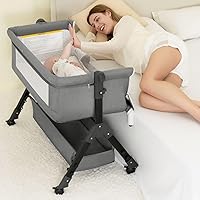
Mesh does not replace supervision, but it avoids adding soft padding around a newborn. If you move to a full crib later, recheck the manual for that crib before adding any rail cover.
How is rail padding different from padded crib bumpers?
Rail padding covers the top rail, while bumpers line the inside sides and ends. That placement changes the risk, so do not treat the two as the same product.
Top rail padding sits where your baby may bite while teething. A thick bumper sits in the breathing zone and can trap a face if your baby rolls toward it.
Rules and guidance have moved toward keeping soft bedding out of the crib.
Many parents also confuse bumpers with a baby crib liner. A liner is also soft material tied inside the crib, so the same caution applies.
If a product ties to the sides, it is not a top rail cover. If it hangs below the top rail inside the crib, treat it as a bumper, not rail padding.
For net or tent products, review crib tent safety guidance before use.
What should you check before you add a rail cover?
Check your crib manual, rail shape, strap length, and whether the cover can shift. A cover that fits a standard rail may not fit a mini crib or a bassinet.
Measure the rail length and thickness before you order. Look for sagging in the middle, gaps at the corners, and ties that can loosen when your baby pulls.
The pad should not slide when you press and pull on it.
Also check the mattress height. As you lower the mattress, your baby gets more room to pull up and chew.
A pad that felt snug with a newborn can become a grip or a loose flap later.
Our guide to best non toxic baby cribs can help if you prefer a crib with a smooth, easy to clean rail. If the maker does not approve a cover, do not force one.
When does teething make rail padding more risky?
Teething makes rail padding more risky when your baby starts pulling up and biting the rail. That is also when loose seams, straps, and folds get the most wear.
Many babies bite the rail from about 4 to 6 months, though timing varies. During that stage, check the cover daily for tears, loose ties, and damp spots.
A wet pad can harbor mildew if it stays in place.
A teething ring or a clean, firm teether kept outside the crib can help. Do not tie a teether to the rail, since a cord can become a strangulation risk.
Diaper cloths and towels also should not be tied to the rail.
That design does not make padding safe by itself. Its lower heights can help you keep the mattress down as your baby learns to sit and pull up.
Which cribs need no rail padding at all?
Some cribs need no rail padding because the rail is smooth, low profile, or enclosed by mesh. Those designs remove the bite concern without adding soft material.
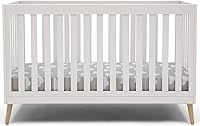
A full size convertible crib may have a wide top rail that your baby can gum. The Dream On Me Synergy 5-in-1 Baby Crib converts from crib to toddler bed, daybed, and full size bed.
It is made from solid New Zealand pinewood, with a heavy duty steel mattress support frame.
Dream On Me says the Synergy is GREENGUARD Gold certified and tested to meet ASTM and CPSC safety requirements. Those claims help with chemical exposure, but they do not approve an aftermarket pad for that rail.
If you like a smooth rail, clean it with a damp cloth and check for splinters. Then rely on mattress height changes, not padding, to keep a climbing baby safer.
How do you install rail padding without creating gaps?
If your crib maker allows a rail cover, install it so it cannot bunch, sag, or slip toward your baby. That means no loose ties, no extra folds, and no pad hanging inside the crib.
Start with a clean, dry rail. Wrap the cover snugly and secure each fastener as directed.
Then press along the full length and pull at each end. If it moves more than a little, it is too loose.
Check corners with special care. Corners often lift first and create a pocket.
A pocket can catch fingers or collect saliva, which can weaken seams over time.
Do not add a second cover over the first one. Layers trap moisture and make ties harder to check.
Also avoid placing a baby crib blanket or other soft item on top of the rail.
After install, look from inside the crib at baby height. No strap, fold, or edge should hang into the sleep space.
If you can see a gap, remove the cover and recheck the fit.
When should you remove or replace rail padding?
Remove rail padding as soon as your baby can pull up, push up, or climb, or when the cover becomes loose. Those milestones change the risk in a short time.
Babies can pull up earlier than many parents expect. If your baby grips the pad to stand, the pad can tear or shift under force.
That is a sign to remove it, not to buy a thicker pad.
Replace or remove a cover if seams split, ties fray, or the fabric stays damp after washing. Also remove it after a mattress height change if the rail exposure changes the fit.
Wash only as the maker directs. Some covers cannot go in a hot wash or dryer without shrinking.
A shrunken cover can become tight in one spot and loose in another.
Keep the crib bare during sleep. A fitted sheet, a firm mattress, and no extra soft items remain the safest setup.
Check What Are the Federal Baby Crib Safety Regulations? for the rules that apply to crib design and use. If your sleep space is a Pack ’n Play, check Pack ’n Play recall guidance.
What are safer alternatives to rail padding?
Safer alternatives include a smooth rail, a lower mattress, and a separate teether outside the crib. Those choices protect gums and help with falls without adding soft material to the rail.
Lower the mattress before your baby can push up. The Synergy crib has three adjustable mattress heights, from newborn access to a lower setting for an active baby.
The mini crib from Dream On Me also has three positions, down to 10.1 inches from the floor.
For teething, offer a firm, one piece teether during awake time. Keep it clean and inspect it for cracks.
Do not tie it to the crib, and do not leave it in the crib as a sleep item.
If your main worry is bumps, check mattress fit and rail spacing first. A snug mattress leaves less room for a limb to slip between the mattress and the side.
In small rooms, a mini crib can keep sleep space close. The Aden mini crib measures 39 inches long by 28 inches wide by 37 inches high.
That size can help in shared rooms, but mattress fit still must be checked with care.
Should you buy rail padding or choose a different crib?
Buy rail padding only if your crib maker approves it for your exact model and it stays snug under daily checks. If not, choose a smooth rail crib or skip the pad.
For a newborn who will share your room, the BabyBond bedside bassinet fits that stage with mesh sides and six height settings. For a longer term crib, the Synergy 5-in-1 fits families who want conversions through toddler and full size bed stages.
For a small space, the Aden mini crib fits apartments and shared rooms. It converts to a mini daybed and then a twin size bed, with conversion kits sold separately.
That path can work well, but confirm mattress size before you buy.
Our score weighs specs, features and buyer feedback against what you are shopping for. The scores above reflect function for each stage, not a claim that any crib makes padding safe.
Keep the decision simple: bare crib, fitted sheet, firm mattress, correct height, and no soft rail cover unless the maker allows it.
Frequently asked questions
Is crib rail padding the same as a crib bumper?
No. Rail padding is supposed to cover the top rail only, while a bumper pads the inside sides.
Safety rules treat soft padding inside the sleep space differently, so check your crib manual and current federal guidance before adding either type.
When should I remove rail padding?
Remove it when your baby can pull up, push up, or climb, or when straps, ties, or seams become loose. Also remove it if it shifts, sags, traps moisture, or no longer fits the rail snugly after a mattress height change.
Can I use a towel or blanket as rail padding?
No. A towel or blanket can bunch, slip, cover the face, or create gaps around the rail.
Use only a cover your crib maker approves for that model, and keep the sleep space bare apart from a fitted sheet.