8 Best Cribs for Child Care Centers (November 2026)
The best cribs for child care centers include the Dream On Me 4-in-1 Mini Baby Crib for small shared nursery rooms, the Dream On Me Synergy 5-in-1 Baby Crib for long term convertible use, and the Delta Children Heartland 4-in-1 Convertible Crib for standard nursery layouts.
On this page (8 sections)
- How We Compared Cribs for Repeated Daily Use
- Best Cribs for Child Care Centers, By Room and Use
- Which Crib Type Fits a Child Care Center Best?
- How Do You Fit Enough Cribs in a Shared Nursery?
- What Safety Checks Matter Most for Center Cribs?
- How Do Mattresses and Sheets Affect Center Use?
- Which Crib Is Easiest to Clean and Move?
- How Should You Choose Between These Eight Picks?
The best cribs for child care centers use fixed sides, lockable casters and mattresses that fit with no gaps. For most centers, that points first to the Foundations models here.
Convertible and mini cribs fit better in small family style settings where daily commercial wear is lighter.
Our score weighs specs, features and buyer feedback against what you are shopping for. We compared size, mattress fit, cleaning, mobility and safety standards across all eight picks.
Repeated daily use changes the choice more than color or conversion style.
Start with What to Look for When Choosing a Crib: What to Consider if you are building a buying checklist for staff. That guide helps you separate must haves from nice extras before you compare models.
Our picks at a glance
-
1
 Best for small shared nursery rooms
Dream On Me 4-in-1 Mini Baby Crib
9.7/10 our score
See it on Amazon -
2
 Best for long term convertible use
Dream On Me Synergy 5-in-1 Baby Crib
9.7/10 our score
See it on Amazon -
3
 Best for standard nursery layouts
Delta Children Heartland 4-in-1 Convertible Crib
9.7/10 our score
See it on Amazon
- 4
 Check it
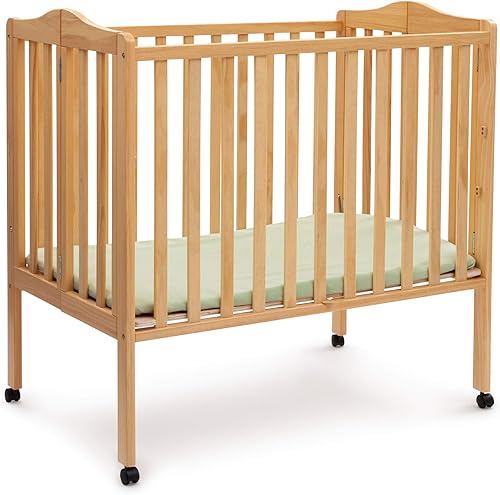
Delta Children Folding Portable Mini Baby Crib
Best for folding and storage - 5
 Check it
Pamo Babe Pack and Play Portable Crib
Best for temporary play and sleep space - 6
 Check it
Foundations First Responder Evacuation Fixed-Side Daycare Crib
Best for evacuation readiness - 7
 Check it
Foundations Serenity Compact Clearview Fixed Side Daycare
Best for visibility in shared rooms - 8
 Check it
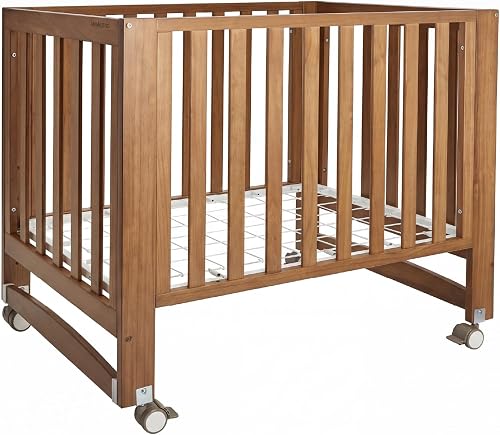
MAMAZING EvoNest 5-in-1 Convertible Baby Mini Crib
Best for flexible mini crib rooms
How We Compared Cribs for Repeated Daily Use
We looked for cribs that can handle many hands, frequent moves and regular cleaning. Fixed side designs scored well because they have fewer moving parts.
We also checked whether a mattress is included, because a snug fit matters in shared rooms.
Cleaning shaped the list too. Vinyl covered foam mattresses wipe clean faster than soft covers.
Clear end panels help staff see a baby without leaning over a rail. Casters help with room changes, but locking casters matter when a crib must stay still.
We gave more weight to commercial compliance where the data showed it. The Foundations cribs name 16 CFR 1220 and ASTM F406-22.
Home cribs name ASTM and CPSC standards, which is good, but centers should confirm local rules.
Size came next. Mini cribs fit more cribs in one room, which helps in shared nursery layouts.
Full size cribs give more sleep space but take more floor area. Portable models help for overflow, but they do not replace fixed side cribs for daily infant sleep.
| Product | Best for | Size | Mattress positions | Conversion | Our score |
|---|---|---|---|---|---|
| Dream On Me 4-in-1 Mini Baby Crib | small shared nursery rooms | 39 x 28 x 37 in | 3 | Mini crib to mini daybed to twin bed | 9.7 |
| Dream On Me Synergy 5-in-1 Baby Crib | long term convertible use | Crib to full size bed | 9.7 | ||
| Delta Children Heartland 4-in-1 Convertible Crib | standard nursery layouts | 54.25 x 29.5 x 35 in | 4-in-1 | 9.7 | |
| Delta Children Folding Portable Mini Baby Crib | folding and storage | 39 x 25 x 37.25 in | 9.4 | ||
| Pamo Babe Pack and Play Portable Crib | temporary play and sleep space | 27.6 x 39.4 x 25.6 in | 9.2 | ||
| Foundations First Responder Evacuation Fixed-Side Daycare Crib | evacuation readiness | 39.33 x 26.25 x 40 in | 8.6 | ||
| Foundations Serenity Compact Clearview Fixed Side Daycare | visibility in shared rooms | 39.75 x 26.25 x 42.1 in | 8.4 | ||
| MAMAZING EvoNest 5-in-1 Convertible Baby Mini Crib | flexible mini crib rooms | 40.1 x 25.7 x 35.4 in | 8.1 |
Best Cribs for Child Care Centers, By Room and Use
The picks below cover the main jobs in a center. Two are built for evacuation and visibility.
Others serve small rooms, folding storage or long term conversion. Pick by the job first, then compare the details.
Dream On Me 4-in-1 Mini Baby Crib: Best for small shared nursery rooms
- 39 x 28 x 37 in
- 3-position mattress support
- Converts to mini daybed and twin bed
- Greenguard Gold certified
A compact 4-in-1 mini crib that fits tight rooms and grows beyond infancy.
Pros
- Compact footprint
- Three mattress heights
- Long use as daybed and twin bed
Cons
- Mattress sold separately
- Conversion kits sold separately
The Dream On Me Aden suits a small center room or a family child care home where floor space is tight. It measures 39 by 28 by 37 inches, so it fits where a full size crib will not.
Three mattress positions drop from 18 inches to 14.1 inches and then 10.1 inches as a baby grows.
That range helps staff lift a newborn more easily at first. Lowering the mattress later helps as a baby sits, pulls up or stands.
The crib converts to a mini daybed and then a twin bed, with conversion kits sold separately for each stage.
Dream On Me says it is Greenguard Gold certified and tested to meet ASTM and CPSC standards. It is made from New Zealand pinewood.
The mattress is sold separately, so you must measure the inside space and buy a standard mini crib mattress that fits snugly.
For a center, the trade off is clear. This crib saves space and lasts for years, but it is a home style convertible, not a fixed side commercial crib.
It wears best where the same few children use it every day.
Dream On Me Synergy 5-in-1 Baby Crib: Best for long term convertible use
- 5-in-1 conversion
- Steel mattress support frame
- Solid New Zealand pinewood
- Greenguard Gold certified
A full size 5-in-1 crib built to stay in use from infancy to school years.
Pros
- Five conversion stages
- Sturdy steel support
- Assembly hardware included
Cons
- Rails sold separately
- Larger footprint than mini cribs
The Dream On Me Synergy suits a center that wants one crib to last for years. It converts through five stages, from crib to toddler bed, daybed and full size bed with or without a footboard.
Toddler guardrail, stabilizer and full size bed rails are sold separately.
A heavy duty steel mattress support frame helps keep the crib steady through daily use. Dream On Me says the frame is crafted from solid New Zealand pinewood.
It ships with assembly hardware, printed instructions and a QR code for a video walkthrough.
The Synergy is Greenguard Gold certified and BSA Verified. Dream On Me says it is tested to meet ASTM and CPSC safety requirements.
That helps in a child care setting where air quality and safety paperwork matter.
The trade off is footprint. This is a full size crib, so fewer units fit in a shared room than with mini cribs.
It also has more moving parts than a fixed side model. Choose it for long term value, not for dense infant rooms.
Delta Children Heartland 4-in-1 Convertible Crib: Best for standard nursery layouts
- 54.25 x 29.5 x 35 in
- 3-position mattress height
- Converts to toddler bed, daybed and full bed
- Greenguard Gold certified
A standard size convertible crib that suits centers with full nursery space.
Pros
- Standard mattress fit
- Three mattress heights
- Multiple finishes
Cons
- Mattress sold separately
- Guardrail and bed frame sold separately
The Delta Children Heartland suits centers with standard nursery layouts and enough wall space. It measures 54.25 by 29.5 by 35 inches and fits a standard size crib mattress, sold separately.
That standard fit makes sheets and replacement mattresses easier to source.
Three mattress height positions let staff lower the mattress as a baby sits or stands. The crib converts to a toddler bed, daybed and full size bed with a headboard.
The toddler guardrail kit and full size metal bed frame are sold separately.
Delta Children says it is JPMA certified to meet or exceed CPSC and ASTM standards. It says the crib is tested for lead and other toxic elements.
It is Greenguard Gold certified in the title data.
The trade off is weight and space. At 38.7 pounds in the data, plus a full size mattress, it is not a light unit to move between rooms.
It has no casters in the data. It fits best in a fixed nursery room, not an evacuation plan.
Delta Children Folding Portable Mini Baby Crib: Best for folding and storage
- 39 x 25 x 37.25 in
- Folds flat
- 1.5 in mattress included
- 2-position mattress height
A folding mini crib with an included mattress for flexible rooms and travel.
Pros
- Folds flat for storage
- Mattress included
- Casters for mobility
Cons
- Only two mattress positions
- Thin included mattress
The Delta Children Folding Portable Mini Baby Crib suits a center that needs flexible sleep space. It folds flat for storage and includes casters for easy mobility.
The included mattress stores inside the crib when it is folded.
The crib measures 39 by 25 by 37.25 inches. The included mattress is 37.5 by 23.25 by 1.5 inches.
Two mattress positions let you lower the mattress as a baby sits or stands.
Delta Children says it is JPMA certified to meet or exceed CPSC and ASTM standards. It says the wood construction is strong and sturdy.
Easy assembly helps staff set up extra sleep space for visitors or overflow days.
The trade off is mattress thickness. A 1.5 inch mattress is thin compared with the 3 inch foam mattresses in the Foundations picks.
It also has only two height positions. Use it for flexibility, not as your main fixed side crib.
Pamo Babe Pack and Play Portable Crib: Best for temporary play and sleep space
- 27.6 x 39.4 x 25.6 in
- Mattress pad included
- Mesh sides
- Tool free assembly
A lightweight pack and play for short stays, overflow and travel use.
Pros
- Lightweight and foldable
- Mesh for visibility
- Quick setup
Cons
- Stop use at 35 in or 33 lb
- Not a fixed side crib
The Pamo Babe Pack and Play suits short term sleep and play space in a center. It sets up with no extra tools and folds to a compact size for storage.
The mattress pad is included, so you can add a sleep space without buying a separate mattress.
Mesh sides help with airflow and visibility. Staff can see a baby more easily than through solid wood rails.
The frame is described as sturdy yet lightweight at 17.6 pounds.
Pamo babe says it meets U.S. children's product safety standards. Use must stop when a child can climb out, or reaches 35 inches or 33 pounds, whichever comes first.
Lock all four side rails before lowering the base, as the maker instructs.
The trade off is purpose. This is a portable playard, not a fixed side crib with a firm commercial mattress.
It works for travel, nap overflow or a visiting child. It should not replace a crib for daily infant sleep in a licensed center.
Foundations First Responder Evacuation Fixed-Side Daycare Crib: Best for evacuation readiness
- 39.33 x 26.25 x 40 in
- 3 in InfaPure mattress included
- Evacuation handles and icons
- Oversized 4 in casters
A fixed side daycare crib made for emergency evacuation and room to room moves.
Pros
- Built in evacuation handles
- Locking casters
- Mattress included
Cons
- Minor assembly required
- Purpose built, not convertible
The Foundations First Responder suits a center that plans for emergencies. It is designed for infant evacuation in daycares, nurseries and child care facilities.
Built in evacuation handles in the headboard give caregivers a secure grip during transport.
Clear evacuation icons in three languages help staff and emergency personnel find it fast. Oversized 4 inch casters move smoothly from room to room.
Two locking casters help keep the crib still when it is not moving.
A 3 inch InfaPure foam mattress is included. Foundations says it is made without chemical flame retardants and complies with federal crib safety standards.
The crib measures 39.33 by 26.25 by 40 inches.
Foundations says it meets ASTM and CPSIA standards for commercial childcare, including 16 CFR 1220 and ASTM F406-22. Minor assembly is required, with tools included.
This is the pick to buy for evacuation readiness first.
Foundations Serenity Compact Clearview Fixed Side Daycare: Best for visibility in shared rooms
- 39.75 x 26.25 x 42.1 in
- 2-panel ClearView ends
- 3 in InfaPure mattress included
- Mortise and tenon construction
A compact fixed side crib with clear ends so caregivers can see babies at a glance.
Pros
- Clear end panels
- Commercial wood build
- Four quiet casters
Cons
- Minor assembly required
- Not convertible
The Foundations Serenity ClearView suits shared rooms where visibility matters. Two transparent end panels let caregivers see a baby at a glance.
Cribs can be arranged end to end while staff keep clear sightlines across the room.
It is a fixed side wood crib with mortise and tenon construction. Foundations says it is built to withstand frequent use in daycares and child care centers.
Four 2 inch non marking casters move quietly, with two locking wheels for secure placement.
A 3 inch InfaPure foam mattress is included, with adjustable mattress height as a baby grows. Foundations says the mattress has a nylon reinforced vinyl cover that is easy to wipe clean.
The crib measures 39.75 by 26.25 by 42.1 inches.
Foundations says it meets CPSC and ASTM standards and is verified by the Baby Safety Alliance for commercial childcare use. It also names 16 CFR 1220 and ASTM F406-22.
Minor assembly is required. For daily infant sleep, this is a strong center pick.
MAMAZING EvoNest 5-in-1 Convertible Baby Mini Crib: Best for flexible mini crib rooms
- 40.1 x 25.7 x 35.4 in
- 4 mattress heights
- Lockable wheels and rocking mode
- Greenguard Gold certified
A wheeled mini crib with four heights and a rocking mode for flexible care rooms.
Pros
- Four mattress heights
- Lockable wheels
- Rocking mode option
Cons
- Mattress not included
- Assembly difficulty rated medium
The MAMAZING EvoNest suits a small care room that needs mobility. It measures 40.1 by 25.7 by 35.4 inches and weighs 22 pounds in the data.
Four adjustable mattress heights cover newborn through standing stages.
Lockable 360 degree wheels move the crib between rooms and lock when needed. Adjustable legs switch to a gentle 9.8 degree rocking mode or a stable mode in 10 seconds.
That rocking option can help soothe a fussy baby during the day.
MAMAZING says it is Greenguard Gold certified and tested for over 10,000 chemical emissions. It is crafted from New Zealand pine wood, with hidden hardware that keeps screws out of reach.
The mattress is not included.
The trade off is assembly and commercial fit. Assembly difficulty is rated medium, and the design is a home style mini crib, not a fixed side commercial model.
Choose it for flexible small rooms, not for dense daily infant care.
Which Crib Type Fits a Child Care Center Best?
Fixed side cribs fit most licensed centers best. They have no drop side, no conversion hardware and fewer parts to check.
The two Foundations picks here use that design for daily use.
Convertible cribs fit family child care homes better. They save money over time because one crib becomes a toddler bed or full size bed.
The Dream On Me Synergy and Delta Children Heartland fit that path.
Mini cribs fit small rooms. The Dream On Me Aden, Delta Children Folding and MAMAZING EvoNest all use less floor space.
That helps when you need more cribs in one shared nursery layout.
Portable playards fit temporary needs. The Pamo Babe works for travel, visits and overflow.
It does not give you the firm, fixed side sleep space that daily infant care needs.
Fixed side versus convertible for daily care
Fixed side wins for centers with many infants. Staff do not convert the crib, check conversion bolts or store extra rails.
Cleaning is faster because the structure stays the same every day.
Convertible wins when a center keeps children for years. A crib that becomes a toddler bed can stay in the same room.
That saves space and avoids buying a separate toddler bed later.
Mini versus full size for shared layouts
Mini cribs let you fit more sleep spaces in one room. That matters for nap pods, shared nursery layouts and small classrooms.
You must buy mini mattresses that fit snugly, with no gaps at the edges.
Full size cribs give more room for a growing baby. They also fit standard mattresses and sheets, which are easier to replace.
The cost is floor space, so measure the room before you choose.
How Do You Fit Enough Cribs in a Shared Nursery?
Measure the room in a grid first. Mark each crib footprint, plus space for a caregiver to stand and bend.
Leave room for diaper changes, cubbies and a safe path to the door.
Clear panel cribs help in rows. The Foundations Serenity lets you line cribs end to end and still see babies.
That layout also helps staff spot a baby who needs help during nap time.
Casters help with daily room changes. Locking casters matter more than smooth rolling alone.
A crib that rolls away during a diaper change or a transfer is a safety issue.
Think about color and calm too. A soft finish may help a room feel calm, and our best baby crib for girl guide shows how finish choices work in nurseries.
For centers, durability and wipe clean surfaces matter more than style.
Spacing, sightlines and staff flow
Place cribs so staff can reach each baby from the side. Avoid tight corners where a caregiver must squeeze in.
Keep a clear walkway to the door for daily use and for drills.
Rotate cribs for cleaning. Move one unit out, wipe the floor space and check casters before you move it back.
That routine also lets you spot loose hardware early.
What Safety Checks Matter Most for Center Cribs?
Check mattress fit first. The mattress should fit snugly with no gap that could trap a baby.
Replace a mattress that sags, tears or no longer fits the frame.
Check sides and hardware every week. Fixed side cribs have fewer parts to fail, but screws and casters still loosen with daily moves.
Tighten hardware as the maker directs.
Confirm standards for your area. Foundations names 16 CFR 1220 and ASTM F406-22 for commercial childcare.
Home cribs name ASTM and CPSC standards, so check your licensing rules before you buy for a center.
Retire damaged cribs fast. Cracked wood, bent rails or broken casters should remove a crib from use.
Do not repair a crib with parts that are not made for that model.
Cleaning for daily use
Wipe rails and end panels daily. Use cleaners approved for the finish and the mattress cover.
Vinyl covered foam, like the InfaPure mattresses here, wipes clean faster than fabric.
Wash sheets and washable covers on schedule. Keep extra sheets ready so a spill does not force you to use a damp mattress.
Let surfaces dry fully before a baby uses the crib again.
How Do Mattresses and Sheets Affect Center Use?
An included mattress saves time at setup. The Foundations picks include 3 inch foam mattresses with wipe clean vinyl.
Our best baby crib with mattress included guide explains what to check when a mattress comes in the box.
A thin mattress changes comfort and fit. The Delta Children Folding includes a 1.5 inch mattress, which is thinner than the 3 inch foam in the Foundations models.
Centers should check firmness and snug fit, not thickness alone.
Sheets need the right size. Mini cribs need mini sheets, not standard crib sheets bunched up to fit.
A loose sheet can bunch and create a hazard, so buy sheets made for that exact mattress size.
Color does not change safety. Some buyers look at a best baby crib pink guide for nursery style, but centers should choose finishes that hide wear and wipe clean.
A light finish can show spills faster, which may help staff clean sooner.
Included mattress versus separate mattress
Included mattresses give you a snug fit on day one. That helps a new center open faster with less guessing.
Check that the cover is wipe clean and that the foam is firm.
Separate mattresses let you choose a cover you prefer. You can buy extra waterproof covers for spills.
Measure the inside of the crib and confirm the mattress size before you order.
Which Crib Is Easiest to Clean and Move?
Vinyl covered mattresses are easiest to wipe. The Foundations InfaPure mattresses use nylon reinforced vinyl, according to Foundations.
That helps with milk spills and diaper leaks.
Clear panels need daily wipes too. The Serenity ClearView panels show fingerprints and smudges.
A quick daily wipe keeps sightlines clear for staff.
Casters cut the effort of room changes. The First Responder uses oversized 4 inch casters with two lockers.
The Serenity uses four 2 inch quiet casters with two lockers.
Folding helps storage, not daily sleep. The Delta Children Folding and Pamo Babe fold for travel or storage.
For daily center use, fixed side cribs with lockable casters are easier to keep in place.
A simple cleaning routine for staff
Wipe rails, panels and handles at the start of the day. Spot clean spills right away.
Check casters and locks before nap time.
Do a deeper clean on a set schedule. Remove the mattress, wipe the frame and inspect hardware.
Record the check so the next shift knows what was done.
How Should You Choose Between These Eight Picks?
Pick the Foundations First Responder if evacuation readiness is your top need. It has handles, icons and locking casters for emergencies.
No other pick here is built for that job.
Pick the Foundations Serenity if daily visibility is your top need. Clear end panels help in shared rooms.
The included 3 inch mattress and commercial build fit daily care.
Pick the Dream On Me Aden if space is tight and you want long use. It is a mini crib that becomes a daybed and twin bed.
Check mattress size before you buy.
Pick the Delta Children Folding if storage and travel matter most. It folds flat and includes a mattress.
Accept the thinner mattress and two height positions.
Pick the Pamo Babe only for temporary use. It is light, portable and easy to set up.
It is not a fixed side crib for daily infant sleep.
Pick the Dream On Me Synergy or Delta Children Heartland for long term conversion. Both are full size cribs with standard or multi stage use.
They fit rooms with more floor space.
Pick the MAMAZING EvoNest for a small room with wheels and rocking. It has four heights and a rocking mode.
It is a home style pick, so confirm center rules first.
The best cribs for child care centers are the ones that fit your room, pass your safety checks and wipe clean every day. Start with the Foundations models for licensed infant rooms.
Add mini or convertible cribs only where the use fits.
Our top 3 picks at a glance
-
1
Best for small shared nursery rooms
Dream On Me 4-in-1 Mini Baby Crib
9.7/10 our score
See it on Amazon -
2
Best for long term convertible use
Dream On Me Synergy 5-in-1 Baby Crib
9.7/10 our score
See it on Amazon -
3
Best for standard nursery layouts
Delta Children Heartland 4-in-1 Convertible Crib
9.7/10 our score
See it on Amazon
Frequently asked questions
What makes a crib right for a child care center?
A center crib needs a fixed side, a firm mattress that fits snugly, casters that lock and surfaces that wipe clean. Commercial models also meet stricter childcare standards.
Convertibility matters less than durability and visibility.
Are mini cribs safe for child care centers?
Mini cribs can be safe when they meet current safety standards and use a snug fitting mini mattress. Check the exact interior size before buying a mattress.
Centers should follow local licensing rules for crib type and spacing.
How often should center cribs be cleaned?
Wipe rails and end panels daily and clean spills as soon as they happen. Follow the maker instructions for approved cleaners.
Check hardware, casters and mattress covers on a regular schedule.


