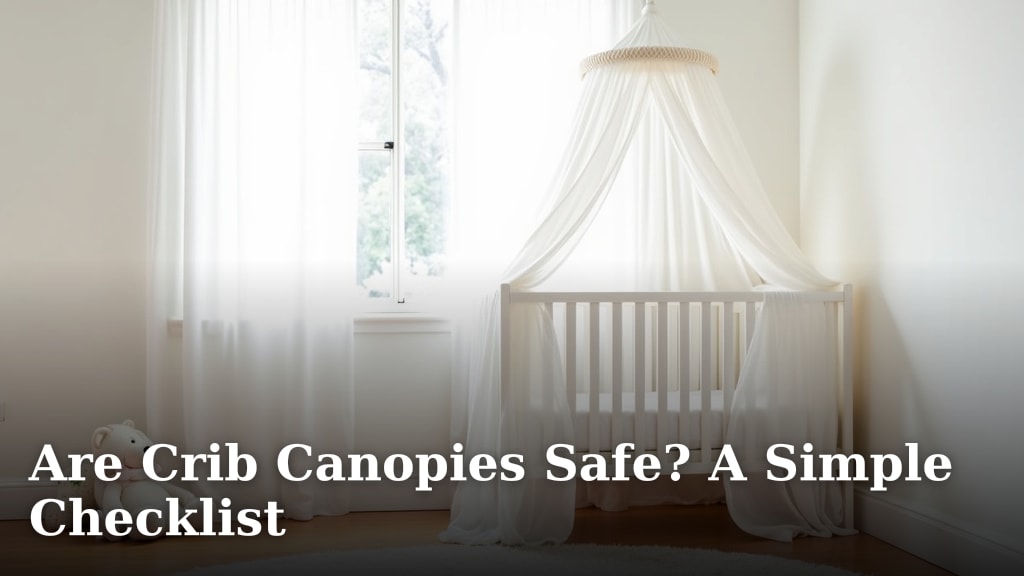
Are Crib Canopies Safe? A Simple Checklist
Yes, crib canopies can be safe when used correctly and with proper precautions. The main concern is suffocation risk if the canopy drapes over a baby. Many safety experts recommend avoiding canopies or using them only under close supervision. We’ve gathered important safety points to help you decide if a crib canopy is right for your baby’s nursery, focusing on infant safety.
While beautiful, crib canopies can pose a suffocation hazard to infants. It’s important to understand the risks and follow guidelines to keep your baby safe. We found that simpler designs and secure attachments are generally safer options. Always prioritize airflow and ensure the canopy never obstructs breathing.
TL;DR:
- Crib canopies can be safe if used with caution.
- The biggest risk is suffocation from draping fabric.
- Always ensure the canopy is securely attached.
- Never let the canopy hang over your baby.
- Consider if a canopy is truly necessary for your nursery setup.
Let’s walk through a simple checklist to help you make sure your crib canopy is used as safely as possible, or if it’s best to skip it altogether.
Is Your Crib Canopy a Safety Hazard? A Simple Checklist
Crib canopies can look so lovely in nursery photos. They add a touch of magic and can make a baby’s sleeping space feel extra cozy. But when it comes to your baby’s safety, we need to be extra careful. We found that while beautiful, these canopies can introduce risks if not used thoughtfully. The primary concern is the risk of your baby getting tangled or the fabric covering their face, leading to breathing problems. Let’s walk through a simple checklist to help you decide if a crib canopy is the right choice for your little one’s nursery and how to use it safely.
Understanding the Risks of Crib Canopies
The main issue with crib canopies is the potential for suffocation. This is a serious concern for any parent. Babies, especially newborns, can’t move away from a blockage to their airway. If a canopy drapes down, it can easily cover their face. This can happen if the baby rolls, kicks, or even just by the fabric shifting.
We found that many safety organizations, like the American Academy of Pediatrics, recommend limiting or avoiding items in the crib that could pose a suffocation risk. This includes pillows, bumpers, and yes, even canopies. The goal is always to keep the crib as clear as possible to ensure **maximum airflow** and reduce hazards.
The Suffocation Danger Explained
Think about how easily a light scarf can get caught on something. For a baby, a soft piece of fabric like a canopy can be just as dangerous. If the fabric comes loose from its attachment, it can fall into the crib. Even if it’s attached securely, a restless baby might pull it down. This is why **constant vigilance** is key.
We’ve looked at reports and found that entanglement is a real danger. A baby could get caught in the fabric, which can be terrifying. It’s important to remember that babies are not born knowing how to free themselves from such situations. Their safety depends entirely on us providing a secure environment.
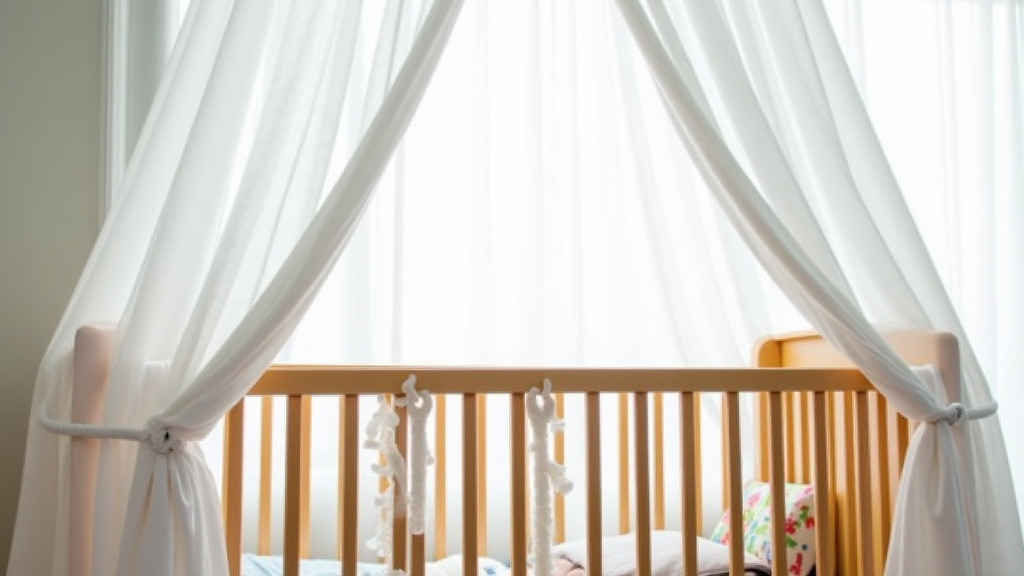
Your Crib Canopy Safety Checklist: Step-by-Step
Before you decide to hang a canopy or if you already have one, let’s go through this checklist. Each point is designed to help you assess the risk and ensure your baby’s safety is the top priority. Consider this your guide to making an **informed decision**.
1. Attachment Method: Is It Secure?
This is perhaps the most critical step. How the canopy attaches to the crib is vital. Does it use screws? Is it a clamp that might loosen? We found that canopies that attach directly to the crib frame with sturdy, secure hardware are generally better than those that just drape over the side. Look for products that are JPMA certified to ensure they meet safety standards.
Types of Attachments and Their Safety
Some canopies have a simple hook or clip. Others might have a pole that inserts into the crib rail. We’ve seen that designs that require tools to assemble or attach are often more stable. Anything that can be easily pulled off or knocked loose by a baby’s movements is a **red flag**.
If your canopy has a pole, ensure it extends well above the crib mattress. It should be rigid and not bend or collapse easily. If the attachment relies on adhesive or Velcro, we’d strongly advise caution. These can degrade over time or lose their stickiness, compromising the canopy’s security.
2. Canopy Design: Less is Often More
Think about the material and the overall design of the canopy. Is it made of a very fine, sheer mesh? Or is it a heavy, opaque fabric? We found that breathable materials like lightweight mesh are generally safer than thick, heavy fabrics.
Airflow and Breathability
The most important thing is that air can still circulate freely around your baby. A canopy that is too dense can trap heat and reduce airflow. This can create a stuffy environment, which is uncomfortable and potentially unsafe. Consider how much air can get through the fabric. Can you easily see your baby through it?
We recommend opting for canopies with a wide opening at the bottom and a design that doesn’t enclose the entire crib. A canopy that merely crowns the top of the crib, rather than draping down the sides, is often a safer choice. It provides the aesthetic without the direct risk of fabric falling into the crib.
3. Canopy Length and Placement: Clear of the Baby!
This is where the suffocation risk comes in most directly. The length of the canopy is a major factor. Does it hang down to or below the crib mattress level? If so, it’s a potential hazard.
Keeping Fabric Away from the Baby
The rule of thumb we’ve seen from safety experts is that the canopy should **never reach the mattress**. If it does, it needs to be significantly shortened or removed. Imagine your baby rolling or sitting up; they could easily pull the fabric down onto themselves. Always ensure there is ample space between the bottom of the canopy and your baby’s head and body.
We also found that the way the canopy is draped matters. Even if it doesn’t reach the mattress, ensure it’s pulled taut and away from the center of the crib. The goal is to keep all fabric as far from the baby’s breathing space as possible.
4. Supervision: Never Leave Unattended
This goes for everything in a baby’s crib, but it’s especially true for items like canopies. If you choose to use a canopy, we strongly advise you to supervise your baby closely, especially when they are in the crib. This means being in the room and aware of what’s happening.
When to Remove the Canopy
As your baby grows and becomes more mobile, the risk increases. If your baby can reach the canopy, pull on it, or stand up in the crib, it’s time for the canopy to come down. We found that many parents remove canopies once their baby starts to become mobile, typically around 6 months or when they can push up on their hands and knees. It’s better to be safe than sorry.
5. Necessity: Do You Really Need It?
Let’s be honest, sometimes we buy things for the nursery because they look pretty. But is a crib canopy truly necessary for your baby’s well-being or sleep? We’ve found that many babies sleep perfectly soundly without any extra décor in their crib.
Prioritizing Sleep Safety Over Aesthetics
Consider the main purpose of the crib: a safe place for your baby to sleep. If a canopy adds any element of risk, no matter how small, and offers no real benefit to your baby’s sleep or comfort, it might be best to skip it. You can always add decorative elements around the nursery that don’t pose a safety threat to your little one. Prioritizing a **clear, safe crib environment** is always the best approach.
Here’s a quick summary checklist for your crib canopy:
- Secure Attachment: Does it attach firmly to the crib frame with sturdy hardware?
- Breathable Fabric: Is the material light and airy, allowing good airflow?
- Shorter Length: Does the canopy stop well above the mattress level?
- No Draping Over Baby: Is it positioned so it can never fall onto your baby’s face?
- Supervision Needed: Are you able to supervise your baby closely when they are in the crib?
- Baby’s Mobility: Is your baby too mobile to safely have a canopy in their crib?
Conclusion
Your baby’s safety in their crib is your top priority, and choosing whether to use a crib canopy means carefully weighing the risks against the aesthetic. We’ve walked through the essential checklist: ensuring secure attachments, opting for breathable fabrics, keeping the canopy well above the mattress, and understanding when supervision is no longer enough. Remember, a clear crib environment is always the safest. If a canopy introduces any doubt or potential hazard, it’s wise to prioritize your baby’s well-being by going without. Make the safest choice for your little one.
Frequently Asked Questions
Are crib canopies mandatory for nursery décor?
No, crib canopies are not mandatory. They are purely decorative items. Many parents successfully create beautiful and safe nursery settings without using a crib canopy at all. Your baby’s sleep safety should always come before décor choices.
What age is too old for a crib canopy?
Generally, it’s recommended to remove a crib canopy once your baby becomes mobile. This often happens around 6 months old, or when they can push up, sit, or stand in the crib. At this stage, they can easily pull the canopy down, increasing the risk of entanglement or suffocation.
Can I use a mosquito net as a crib canopy?
Some lightweight mosquito nets designed for cribs can be safer than traditional canopies if they have a secure attachment that keeps the netting well above the baby and out of reach. Always check that the netting is breathable, doesn’t drape into the crib, and is firmly attached so it cannot fall on your baby.
What if my crib canopy is attached securely but still looks long?
If your securely attached canopy still looks long or drapes down towards the mattress, it poses a suffocation risk. You should either shorten it yourself, ensuring it stays well above the mattress level, or remove it entirely. Never allow any part of the canopy fabric to hang where your baby could reach it.
Is it okay to use a crib canopy if I plan to supervise my baby constantly?
Constant, attentive supervision is always recommended, but it doesn’t entirely eliminate the risk associated with crib canopies. Babies can move unexpectedly, and fabric can shift or fall even during brief moments when you’re not directly looking. Prioritizing a canopy-free crib for maximum safety is still the best approach.