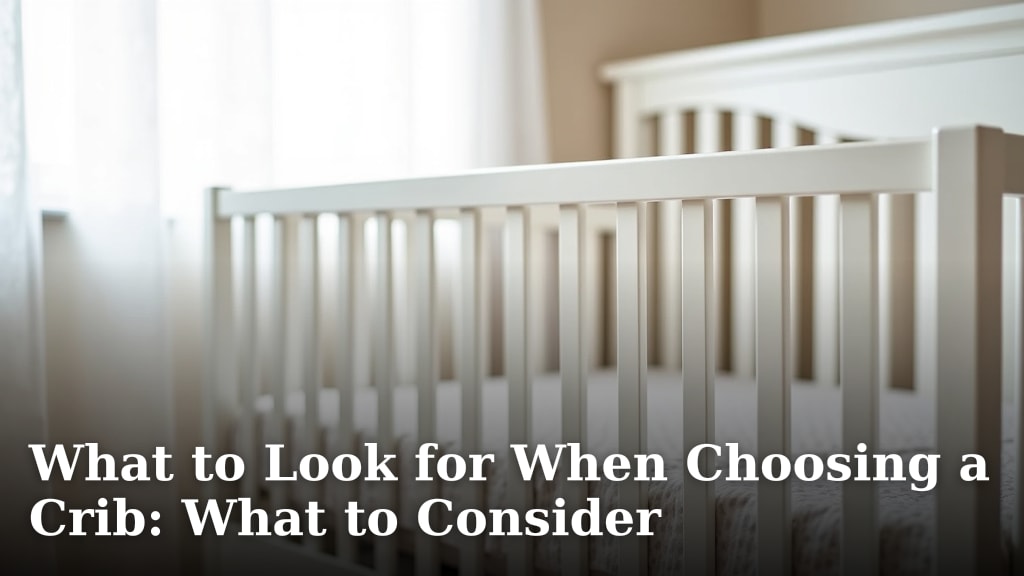
What to Look for When Choosing a Crib: What to Consider
Choosing a crib for your baby means looking for safety, durability, and ease of use. You want a crib that meets current safety standards, has a sturdy frame, and is simple to assemble. A good crib is a safe haven for your little one. This guide will help you make a smart choice for your family.
There are many crib styles available, from basic models to those that convert as your child grows. We found that considering your budget and the available space is also important. Don’t forget to check the mattress support and ensure it’s firm. Many experts say a good crib is a long-term investment.
- Check for current safety certifications.
- Ensure the crib has a sturdy construction.
- Look for adjustable mattress heights.
- Consider cribs that convert as your child grows.
- Think about your budget and available space.
Let’s walk through the most important factors to consider when you’re shopping for the perfect crib for your baby.
So, you’re ready to pick out a crib for your little one! This is a big purchase, and you want to get it right. It’s more than just a piece of furniture; it’s where your baby will spend a lot of time sleeping, dreaming, and growing. We’ve looked into what makes a crib a good choice, and it really comes down to a few key areas. Let’s dive into what you should be looking for to ensure you bring home a safe and sound nursery centerpiece.
Your Guide to Selecting a Safe and Sturdy Crib
Choosing the right crib involves careful consideration of safety, construction, and functionality. You’re looking for a piece that will keep your baby secure night after night.
Safety First: The Non-Negotiables
This is the most important part of choosing a crib. Safety standards are in place for a reason. You want to make sure the crib you choose meets all current safety guidelines set by organizations like the Consumer Product Safety Commission (CPSC) in the United States.
Checking for Certifications and Standards
Look for cribs that are JPMA certified. The Juvenile Products Manufacturers Association (JPMA) certifies that products meet or exceed industry safety standards. This certification is a good indicator that the crib has passed rigorous testing. You’ll often see a JPMA seal on the product packaging or description. This stamp means the manufacturer has voluntarily submitted their product for testing and verification. It’s a helpful shortcut to knowing a crib has met a high bar for safety.
Understanding Slat Spacing and Rail Height
The gaps between the crib slats are critical. Research and found that slats should be no more than 2 3/8 inches apart. This prevents a baby’s head from getting stuck between them. Also, the distance from the mattress support to the top of the crib rails should be adequate. Many guidelines suggest the side rails should be at least 9 inches above the mattress when it’s in its lowest position. This helps prevent your baby from climbing out once they become more mobile. Always check the manufacturer’s specifications for these measurements.
Avoiding Drop-Side Cribs
You might see older cribs or even some used ones with drop-side rails. We found that these types of cribs have been banned in the U.S. since 2011. They pose a serious entrapment and suffocation risk. Always choose a crib with fixed side rails. It’s a simple yet vital safety feature that has been proven to be much safer for infants and toddlers. Never use a crib that has a drop-side mechanism.
Construction and Durability: Building a Bed That Lasts
A crib needs to be built tough. Babies are surprisingly strong and active, even when they’re tiny. You want a crib that can withstand years of use, from infancy through the toddler years.
Materials Matter: Solid Wood is Key
We found that cribs made from solid wood, like pine, poplar, or birch, tend to be the most durable. Look for pieces where the side rails, headboard, and footboard are made from solid wood. Avoid cribs made entirely of particleboard or composite materials, as these can be less sturdy and may not hold up over time. Check for sturdy joinery; the crib should feel solid and not wobbly when assembled.
Mattress Support: The Foundation of a Safe Sleep
The mattress support is the base that holds your baby’s mattress. It should be made of metal or strong wooden slats. Many experts say that the mattress support should be firmly attached and should not sag. Check that there are enough slats to provide even support. Some cribs have adjustable mattress heights, which is a great feature as your baby grows. Make sure the mechanism for adjusting the height is secure and easy to operate, but not so easy that a child could change it.
Finishes and Coatings: What’s Under the Paint?
When choosing a crib, pay attention to the finish. It should be non-toxic and lead-free. Lead paint is a serious health hazard for children. Look for cribs that are certified as meeting current safety standards for finishes. The CPSC has strict regulations on lead and phthalates in children’s furniture. If you’re buying a used crib, be extra cautious about its finish. Sometimes, older cribs might have been painted with lead-based paint.
Functionality and Features: Making Life Easier
Beyond safety and solid construction, there are features that can make a crib more practical for your family.
Adjustable Mattress Heights: Growing with Your Child
Most cribs offer multiple mattress height settings. This is a fantastic feature! When your baby is an infant, you’ll want the mattress set high for easy access. As they start to sit up and then stand, you’ll lower it to the lowest setting. This prevents them from climbing out. We found that cribs with at least three mattress height options provide good flexibility for different stages of your child’s development.
Convertible Cribs: A Long-Term Investment
Convertible cribs are designed to adapt as your child grows. They can transform from a crib into a toddler bed, and often into a daybed or even a full-size bed. This can be a cost-effective option in the long run, as you won’t need to buy new beds as frequently. When considering a convertible crib, check the conversion kits. Ensure they are sturdy and easy to install. Also, confirm that the converted bed will meet safety standards for older children.
Ease of Assembly and Portability
Let’s be honest: assembly can be a headache. We found that cribs with clear instructions and simple hardware are much appreciated. Before you buy, you might want to read reviews about assembly. Some cribs are also designed to be foldable or portable, which can be useful if you plan to move the crib between rooms or take it on trips. However, ensure that any portable crib still meets all standard safety requirements.
Considering Your Space and Budget
Before you fall in love with a crib, take a step back and think about your nursery and your wallet.
Crib Size and Room Fit
Standard cribs are generally about 28 inches wide and 53 inches long. Make sure you have enough space in your nursery for the crib, plus room to walk around it. Measure your room carefully. You don’t want to end up with a crib that’s too big or too small. Some cribs are also available in mini sizes, which are great for smaller spaces or apartments.
Setting a Realistic Budget
Crib prices can range from a few hundred dollars to over a thousand. We found that you don’t necessarily need to buy the most expensive crib to get a safe and durable one. Focus on the safety certifications and sturdy construction. Many excellent cribs fall into the mid-price range. Remember to factor in the cost of a good crib mattress, which is sold separately and is also a critical safety item.
Here’s a quick checklist to help you as you shop:
- Confirm JPMA certification or equivalent safety testing.
- Check that slat spacing is no more than 2 3/8 inches.
- Ensure side rails are at least 9 inches above the mattress support.
- Look for solid wood construction and a sturdy mattress support.
- Consider adjustable mattress heights and convertible options.
- Measure your room and set a budget before you start shopping.

Conclusion
You’ve got this! Choosing a crib is a big step, but by focusing on safety certifications and sturdy construction, you’ll make a great choice. Remember to check for things like proper slat spacing and non-toxic finishes. Convertible cribs can offer long-term value for your growing family. Once you’ve identified a few options that meet these standards, measure your nursery space and set your budget. Your next step is to visit a store or browse online retailers with this checklist in hand to find that perfect, safe haven for your baby.
Frequently Asked Questions
What is the most critical safety feature to look for in a crib?
The most critical safety feature is ensuring the crib meets current safety standards, often indicated by JPMA certification. This means it has passed rigorous testing for things like slat spacing and rail height. Always verify these details to protect your baby.
How do I know if a crib’s mattress support is good?
A good mattress support should be firm and made of sturdy metal or solid wooden slats. It should not sag and must be securely attached to the crib frame. Adequate slats provide even support, which is essential for your baby’s safety and comfort.
Are cribs with adjustable mattress heights really necessary?
Yes, adjustable mattress heights are a very practical feature. You’ll use the higher settings when your baby is young for easier access. As your baby grows and starts to sit up or stand, you’ll lower the mattress to the lowest setting to prevent them from climbing out.
What are the risks of using a used crib?
Used cribs might not meet current safety standards, and older models could have banned features like drop-side rails. There’s also a risk of hidden damage or the use of toxic finishes. It’s often safer to buy a new crib that you know meets today’s regulations.
How much should I expect to spend on a crib?
Crib prices vary widely, from a few hundred to over a thousand dollars. You don’t need the most expensive model to get a safe and durable crib. Focus on safety certifications and solid construction within your budget. Don’t forget to budget for a separate, firm crib mattress.